
Best Face Cleanser: Your cleanser is the most important product in your skincare routine—and the one most people get completely wrong.
Here is why it matters so much: your cleanser is the foundation of everything that follows. A cleanser that strips your skin barrier triggers rebound oil production in oily skin, worsens dehydration in dry skin, and causes the sensitivity that makes every serum and treatment feel irritating. A cleanser that does not cleanse thoroughly leaves residue that blocks serum absorption, traps pollution against the skin, and creates the congestion that turns into breakouts. Best Face Cleanser
What Makes a Great Face Cleanser?
Before the rankings—understanding what separates a genuinely good cleanser from a mediocre one explains every choice on this list.
Surfactant Type—The Most Important Factor
Surfactants are the cleansing agents that lift oil, dirt, and dead skin cells from the skin surface. The type of surfactant determines how effectively a cleanser cleans and how much damage it does to the barrier in the process. Best Face Cleanser
Harsh surfactants to avoid:
Sodium lauryl sulfate (SLS)—the most common and most damaging. Provides the dramatic lather most people associate with “clean” but strips the acid mantle and disrupts the microbiome significantly
Sodium laureth sulfate (SLES)—milder than SLS but still problematic for sensitive and dry skin
Ammonium lauryl sulfate—similarly harsh
Gentle surfactants to look for: Best Face Cleanser
Sodium lauroyl lactylate—mild, derived from coconut oil and lactic acid
Sodium lauroyl methyl isethionate—very gentle, creamy lather
pH—The Second Most Important Factor
Your skin’s natural pH is 4.5 to 5.5—slightly acidic. This acid mantle protects against bacteria, maintains barrier function, and ensures optimal enzyme activity for normal skin cell turnover.Best Face Cleanser
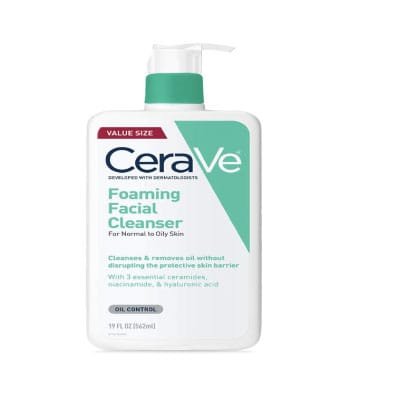
1. CeraVe Foaming Facial Cleanser — Best Overall Face Cleanser
Why it wins: CeraVe Foaming Facial Cleanser appears at the top of more dermatologist recommendation lists than any other cleanser at any price point—and it has earned this position through consistent clinical formulation rather than marketing budget.
The formula uses sodium lauroyl lactylate as its primary surfactant—dramatically milder than the SLS found in most competing foaming cleansers—alongside three essential ceramides (1, 3, and 6-II) and hyaluronic acid. This combination actively repairs the skin barrier during the cleansing process rather than simply tolerating the damage most cleansers cause.Best Face Cleanser
The niacinamide addition in the current formula provides mild anti-inflammatory activity and ongoing barrier support throughout the 60-second contact time.Best Face Cleanser
The result: a foaming cleanser that removes excess sebum and impurities effectively without the stripping, barrier disruption, and rebound oiliness that harsher cleansers cause. The post-cleanse feeling—clean but comfortable, not tight or dry—is immediately distinguishable from most competitors.
🛒 CeraVe Foaming Facial Cleanser—The most dermatologist-recommended face cleanser
2. CeraVe Hydrating Facial Cleanser — Best Face Cleanser for Dry Skin
Why it wins: While the Foaming Cleanser serves oily skin, CeraVe Hydrating Facial Cleanser is its dry-skin counterpart—and equally well-formulated for its target audience. The non-foaming, lotion-like formula uses a micellar cleansing system rather than traditional surfactants—removing impurities through attraction rather than stripping.
The same three ceramides and hyaluronic acid present in the Foaming Cleanser appear here—but in a formula that deposits moisture rather than removing it. The post-cleanse skin feels genuinely hydrated rather than merely “not dry.” For dry skin types that have always found cleansing to be the most uncomfortable step in their routine, this cleanser changes that experience entirely.
🛒 CeraVe Hydrating Facial Cleanser—Best face cleanser for dry and sensitive skin.
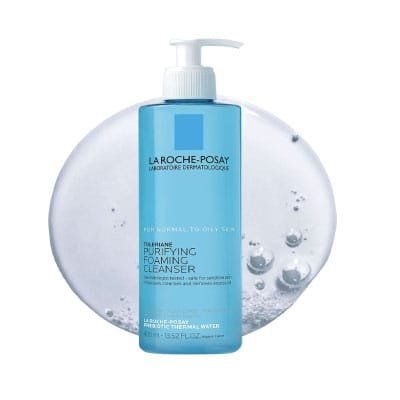
3. La Roche-Posay Toleriane Hydrating Gentle Cleanser — Best Face Cleanser for Sensitive Skin
Why it wins: La Roche-Posay has built its brand reputation around the most reactive, sensitive, and compromised skin types—and the Toleriane Hydrating Gentle Cleanser is the purest expression of this philosophy. The formula contains only the minimum ingredients necessary to cleanse effectively without any potential irritant.
The La Roche-Posay thermal spring water base provides additional calming benefit through its unique mineral composition and documented anti-irritant properties. Glycerin and niacinamide support barrier function. And the completely fragrance-free, paraben-free, oil-free formula removes virtually every category of potential irritant.
For rosacea-prone skin, post-procedure skin, or any condition where even mild sensitivity concerns exist—this is the safest effective cleanser available.
Key ingredients: La Roche-Posay thermal spring water · Niacinamide · Glycerin · Ceramide-3 Fragrance-free: Yes ✅ Best for: Best face cleanser for sensitive skin · best face cleanser for rosacea · best face cleanser for eczema · best face cleanser after procedures
🛒 La Roche-Posay Toleriane Hydrating Gentle Cleanser—Best face cleanser for reactive and sensitive skin.
4. COSRX Low pH Good Morning Gel Cleanser—Best Korean Face Cleanser
Why it wins: The COSRX Low pH Good Morning Gel Cleanser changed how Korean beauty communities understood cleansing—introducing the concept of pH-balanced cleansing to mainstream skincare discussion and demonstrating that a cleanser at pH 5.0 could cleanse just as effectively as alkaline alternatives while dramatically reducing barrier disruption.
The willow bark water base delivers natural BHA exfoliation at a very gentle concentration—providing mild ongoing pore-clearing activity at the cleansing step before any toner or treatment reaches the skin. Tea tree leaf oil provides mild antibacterial activity without the irritation of high-concentration tea tree products.
For oily and acne-prone skin, building a Korean skincare routine is the starting point that makes every subsequent step work more effectively.
Key ingredients: Willow bark water (natural BHA) · Tea tree leaf oil · Betaine pH: 5.0 Fragrance-free: Light natural scent Best for: Best Korean face cleanser · best face cleanser for oily Korean skin · Best face cleanser for acne Korean skincare
🛒 COSRX Low pH Good Morning Gel Cleanser—Best Korean face cleanser for oily and acne-prone skin.
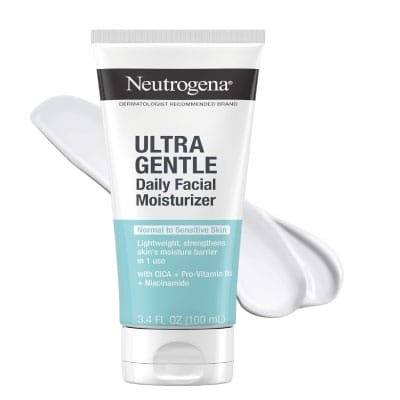
5. Neutrogena Ultra Gentle Hydrating Cleanser — Best Budget Face Cleanser
Why it wins: Neutrogena’s Ultra Gentle Hydrating Cleanser is the most consistently overlooked drugstore cleanser—sitting in the shadow of the brand’s more famous products while quietly delivering one of the gentlest, most effective cleansing experiences available at its price point.
The fragrance-free, non-comedogenic, hypoallergenic formula uses an exceptionally gentle surfactant system alongside glycerin and emollients that leave skin feeling hydrated and comfortable. For budget-conscious users who need a gentle daily cleanser without compromise—this delivers clinical-level gentleness at a drugstore price.
🛒 Neutrogena Ultra Gentle Hydrating Cleanser—Best budget gentle face cleanser
6. La Roche-Posay Effaclar Purifying Foaming Gel — Best Face Cleanser for Acne
Why it wins: When the goal is specifically targeting oily, acne-prone skin, La Roche-Posay Effaclar Purifying Foaming Gel is the most clinically sophisticated option. Zinc pidolate provides sebum-regulation activity at the cleansing step. The formula removes excess oil more aggressively than standard gentle cleansers—appropriate for skin that genuinely needs deep cleansing without compromising the barrier the way SLS-based cleansers do.
Dermatologists specifically recommend this formula for hormonal acne, severe oiliness, and skin under prescription acne treatment (tretinoin, clindamycin)—where more thorough cleansing is needed but barrier disruption must be avoided.
🛒 La Roche-Posay Effaclar Purifying Foaming Gel—Best face cleanser for acne and very oily skin.
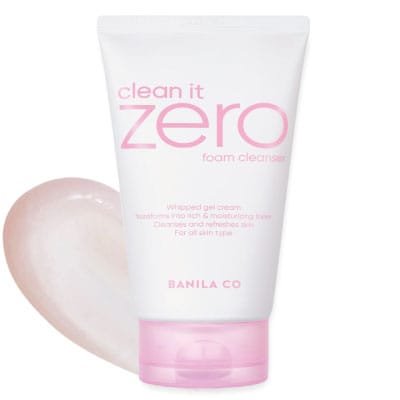
7. Banila Co Clean It Zero Cleansing Balm—Best Oil Cleanser / Double Cleanse First Step
Why it wins: The Banila Co Clean It Zero is the most famous cleansing balm in Korean beauty—and the product most responsible for introducing the double cleanse concept to Western skincare communities. The lightweight balm texture transforms into a silky oil on skin contact, dissolving SPF, makeup, and sebum completely without leaving any oily residue after rinsing.
For anyone wearing daily SPF (which is everyone)—a standard water-based cleanser cannot remove oil-based sunscreen filters no matter how thoroughly you rinse. The Banila Co balm removes them completely in 60 seconds—leaving genuinely clean skin ready for the second cleansing step and for treatment products to absorb at full efficacy.
🛒 Banila Co Clean It Zero Cleansing Balm—Best cleansing balm for double cleanse.
8. Paula’s Choice RESIST Perfectly Balanced Foaming Cleanser — Best Anti-Aging Face Cleanser
Why it wins: Paula’s Choice RESIST Cleanser is specifically formulated for mature and aging skin—addressing the unique challenge that mature skin faces with cleansing: it needs thorough cleaning (often wearing heavier moisturizers and SPF) while being increasingly barrier-compromised and sensitive as natural lipid production declines with age.
The formula balances effective foaming cleansing with antioxidant ingredients and a pH that does not disrupt the already-compromised barrier of mature skin. The results—genuinely clean skin that does not feel stripped or tight—are particularly noticeable compared to standard foaming cleansers that leave mature skin feeling dry after every use.
🛒 Paula’s Choice RESIST Perfectly Balanced Foaming Cleanser — Best face cleanser for mature and aging skin.
9. Vanicream Gentle Facial Cleanser — Best Face Cleanser for Eczema and Allergies
Why it wins: Vanicream is the brand dermatologists and allergists recommend when they need a cleanser with virtually zero irritation potential. The formula is certified free of dyes, fragrance, masking fragrance, lanolin, parabens, formaldehyde, and formaldehyde releasers—removing every major category of skin allergen simultaneously.
For skin with known allergies, eczema, perioral dermatitis, or any condition where identifying and eliminating potential triggers is important, Vanicream Gentle Facial Cleanser is the clinical starting point. It will not trigger reactions. It will not worsen any existing condition. And it cleanses effectively enough for daily morning and evening use.
🛒 Vanicream Gentle Facial Cleanser—Best hypoallergenic face cleanser for eczema and allergies.
10. The Ordinary Squalane Cleanser—Best Minimalist Face Cleanser
Why it wins: The Ordinary Squalane Cleanser is the most elegant minimalist face cleanser available—and the most versatile. The squalane base melts into skin like an oil cleanser, dissolving SPF and makeup effectively, then emulsifies with water and rinses completely clean without any residue. The result is genuinely clean skin that feels as though nothing happened to it—no dryness, no tightness, no oiliness, and no feeling at all.
For those who want a single cleanser that works as both a makeup remover and a face wash—eliminating the need for a separate double-cleanse first step—the Squalane Cleanser is the most practical option. It also works exceptionally well for sensitive skin because squalane is one of the most biocompatible skincare ingredients available.
🛒 The Ordinary Squalane Cleanser—Best minimalist all-in-one face cleanser.
Best Face Cleanser by Skin Type
Best Face Cleanser for Oily Skin
Oily skin needs a cleanser that removes excess sebum effectively without stripping the barrier—triggering the rebound oil production that harsh cleansers cause.
Top 3 picks:
- CeraVe Foaming Facial Cleanser—ceramides prevent rebound stripping
- La Roche-Posay Effaclar Purifying Gel—zinc for additional oil regulation
- COSRX Low pH Good Morning Gel Cleanser—pH 5.0 optimal for oily skin
How to cleanse oily skin correctly: Use lukewarm, never hot, water. Massage gently for 60 seconds, focusing slightly more time on the T-zone. Rinse completely. Pat dry—never rub. Cleansing twice daily maximum—more strips the barrier and worsens oiliness.
Best Face Cleanser for Dry Skin
Dry skin needs a cleanser that removes impurities without removing the limited natural lipids that dry skin already struggles to maintain.
Top 3 picks:
- CeraVe Hydrating Facial Cleanser—ceramides and HA deposit during cleansing
- La Roche-Posay Toleriane Hydrating Gentle Cleanser—maximum gentleness
- The Ordinary Squalane Cleanser—squalane protects the barrier throughout cleansing
Dry skin cleansing rules: Never use foaming or gel cleansers. Always use lukewarm or even slightly cool water. Apply moisturizer within 60 seconds of cleansing while skin is still damp.
Best Face Cleanser for Combination Skin
Combination skin needs a middle-ground cleanser—effective enough for the oily T-zone, gentle enough for the drier cheek areas.
Top 3 picks:
- CeraVe Foaming Facial Cleanser—mild enough for cheeks, effective for T-zone
- COSRX Low pH Cleanser—pH-balanced for all zones
- Neutrogena Ultra Gentle—gentlest effective option for both zones
Combination skin technique: Spend slightly more time massaging the T-zone during cleansing. Use slightly less pressure on the cheek and jaw areas. If cheeks feel tight after cleansing, switch to CeraVe Hydrating Cleanser.
Best Face Cleanser for Acne-Prone Skin
Acne-prone skin needs a cleanser that removes pore-clogging sebum effectively while the non-comedogenic formula adds nothing that could trigger new breakouts.
Top 3 picks:
- La Roche-Posay Effaclar Purifying Gel—zinc pidolate for sebum regulation
- CeraVe Foaming Facial Cleanser—ceramides prevent barrier damage that worsens acne
- COSRX Low pH Good Morning Gel—natural BHA for mild pore clearing at the cleanse step
Important rule: A cleanser alone cannot treat acne. It removes surface sebum but cannot reach inside pores where blackheads form. A leave-on BHA toner (Paula’s Choice 2% BHA) applied after cleansing is the treatment step that actually clears congestion. Your cleanser prepares the skin for this treatment—it does not replace it.
Best Face Cleanser for Sensitive Skin
Sensitive skin needs fragrance-free, minimal-ingredient formulas with no potential irritants—tested not to cause reactions on the most reactive skin types.
Top 3 picks:
- La Roche-Posay Toleriane Hydrating Gentle Cleanser—most gentle effective option
- Vanicream Gentle Facial Cleanser—zero allergens
- CeraVe Hydrating Facial Cleanser—ceramides support barrier
Sensitive skin rule: When introducing any new cleanser, patch test on the inner wrist for 24 hours before full face use. Introduce only one new product at a time.
How to Cleanse Your Face Correctly
The best face cleanser in the world cannot overcome incorrect technique. Here is the exact protocol:
Step 1—Temperature
Lukewarm water only. Hot water strips natural oils from the skin surface—even the most gentle cleanser cannot compensate for hot water damage done before the cleanser touches the skin. Cold water does not open pores (a myth) and does not dissolve sebum effectively.
Step 2 — Wet Your Face First
Always wet your face thoroughly before applying cleanser. Applying cleanser to dry skin concentrates surfactant activity on specific areas rather than distributing it evenly across the skin surface.
Step 3 — Use the Right Amount
A pea to grape-sized amount is sufficient for the entire face with most cleansers. More product does not mean better cleansing—it means more rinsing required and increased barrier disruption risk.
Step 4—Massage for 60 Seconds
The recommended minimum contact time for surfactants to dissolve oil-based impurities is 60 seconds. Most people cleanse for 10 to 15 seconds—insufficient for thorough cleansing regardless of how good the formula is.
Step 5—Rinse Completely
Cleanser residue left on skin causes irritation, blocks subsequent product absorption, and can trigger breakouts in pore-prone skin. Rinse for 20 to 30 seconds after the foam or lather has disappeared.
Step 6—Pat Dry—Never Rub
Rubbing with a towel creates friction on the freshly cleansed skin surface. Pat gently with a clean towel. Replace face towels frequently—damp towels harbor bacteria.
Step 7—Apply Next Product Immediately
Apply your toner, serum, or moisturizer within 60 seconds of cleansing while the skin surface is still slightly damp. This improves humectant absorption and prevents the transepidermal water loss that occurs on freshly cleansed bare skin.
Morning vs. Night Cleansing—Do You Need Both?
Yes—but for different reasons.
Morning cleansing: Removes overnight sebum production, bacteria that accumulate on the pillow, and any night product residue that has not fully absorbed. Creates a clean surface for morning actives (vitamin C, niacinamide) to absorb at full efficacy.
Night cleansing: The most important cleansing of the day. Removes the day’s accumulated SPF, pollution particles, sebum oxidation products, and any makeup. Without thorough night cleansing, your treatment serums and night moisturizer absorb through a contaminated surface at a fraction of their potential.
For those wearing SPF daily (everyone): Night cleansing requires a double cleanse—oil cleanser first to remove SPF, followed by your regular water-based cleanser. A single water-based cleanser cannot fully remove oil-based SPF filters regardless of how long you use it.-recommended option.
How often should I wash my face?
Twice daily—morning and night. Over-cleansing (more than twice) strips the skin barrier and causes rebound oil production in oily skin and increased dryness in dry skin. Under-cleansing (once daily or less) allows sebum, pollution, and SPF to accumulate and block pore openings. Morning and night consistently is the optimal frequency for every skin type.
Should I use a different cleanser morning and night?
Most people benefit from using the same cleanser twice daily. However—for those wearing daily SPF—a different approach at night is beneficial: oil cleanser first (to fully remove SPF), then your regular cleanser. This double-cleanse approach ensures SPF is fully removed without requiring a single cleanser to work twice as hard.
Final Thoughts — Finding Your Best Face Cleanser
The best face cleanser is not the one with the most impressive lather, the most dramatic clean feeling, or the highest price. It is the one formulated with gentle surfactants at the right pH for your skin type—that removes impurities effectively without triggering the barrier disruption that makes every other product in your routine work harder to compensate.
For most oily and combination skin, CeraVe Foaming Facial Cleanser is the starting point that dermatologists have been recommending for years because it gets the balance exactly right. For dry and sensitive skin, CeraVe Hydrating Facial Cleanser or La Roche-Posay Toleriane Gentle Cleanser provides the maximum gentleness that compromised skin needs. For acne-prone skin that needs more oil removal, La Roche-Posay Effaclar Purifying Gel delivers the thoroughness without the harshness.