
Dry vs Dehydrated Skin You moisturize every day. You drink water. You avoid harsh cleansers. And yet your skin still looks dull, feels tight after cleansing, and shows fine lines that disappear when you press your finger into the skin.
Sound familiar? Dry vs Dehydrated Skin
Here is what is almost certainly happening — you are treating the wrong problem. Because dry skin and dehydrated skin are not the same condition. They do not have the same cause. They do not have the same solution. And treating one when you actually have the other is exactly why so many skincare routines fail to deliver the results they should.
This is genuinely one of the most misunderstood distinctions in all of skincare, and understanding it changes everything about how you build your routine, which products you buy, and why your current products may not be working the way you expect.
The Most Important Distinction in Skincare: Dry vs Dehydrated Skin
Let us start with the fundamental difference: Dry vs Dehydrated Skin
Dry skin is a skin type. You are born with it. Your sebaceous glands produce less oil than normal, meaning your skin lacks lipids (oils) that form the protective barrier layer.
Dehydrated skin is a skin condition. Anyone can have it—including people with oily skin. Your skin lacks water — not oil — in the outer skin layer (epidermis). Dry vs Dehydrated Skin
This distinction matters enormously because the following:
Dry skin lacks oil → needs oil-based emollients and occlusives
Dehydrated skin lacks water → needs water-based humectants like hyaluronic acid
Using the wrong treatment makes both conditions worse. Piling rich oils onto dehydrated skin does not fix it—the skin lacks water, not oil. And applying only hyaluronic acid to truly dry skin without sealing it with an oil-based moisturizer means the attracted water evaporates immediately.
What Is Dry Skin? — Complete Explanation
Dry skin (clinically called xerosis) is a skin type characterized by insufficient sebum production. Your sebaceous glands — the oil glands in your skin — do not produce enough oil to maintain the skin’s natural lipid barrier.
Why Dry Skin Happens
Genetics — The most common cause. Some people are simply born with fewer or less active sebaceous glands. This is particularly common in fair skin and skin with a thinner epidermis. Dry vs Dehydrated Skin
Age — Sebaceous gland activity naturally declines with age. Skin that was normal or combination in the 20s and 30s often becomes genuinely dry in the 40s and 50s.
Hormones—Estrogen influences sebaceous gland activity. The decline of estrogen during menopause is one of the most significant causes of adult dry skin. Dry vs Dehydrated Skin
Climate — Cold climates reduce sebaceous gland activity. This is why many people experience dry skin in winter that resolves in summer.
Hot water — Repeatedly showering or bathing in hot water strips the natural oil barrier faster than it can be replenished.
Harsh cleansers—SLS-based cleansers and alkaline soaps—disrupt the acid mantle and strip lipids, converting normal or combination skin into temporarily dry skin with repeated use. Dry vs Dehydrated Skin
Dry Skin Symptoms
Skin that feels tight, uncomfortable, or rough—especially after cleansing
Visible flaking or peeling—small dry patches particularly around the nose, cheeks, and jawline
A rough or sandpaper-like texture
Skin that looks ashy or dull
Fine lines that appear deeper and more pronounced
Redness or irritation—particularly in cold or dry weather
Itching—particularly when skin is very dry
Skin that absorbs products quickly but never feels comfortable for long
Makeup that clings to dry patches and looks patchy
Skin Types Affected by Dry Skin: Dry vs Dehydrated Skin
Dry skin is a permanent or long-term skin type that persists regardless of weather, hydration, or skincare routine—though it can be managed effectively. If your skin has always produced little oil, you likely have a genuinely dry skin type.
What Is Dehydrated Skin? — Complete Explanation
Dehydrated skin is a skin condition that is temporary, treatable, and capable of affecting every single skin type, including oily skin. It occurs when the outer layer of the skin (stratum corneum) lacks adequate water content.
Why Dehydrated Skin Happens
Damaged skin barrier — The most common cause. When the skin barrier is compromised — by harsh cleansers, over-exfoliation, retinoids, or environmental damage — it cannot retain water effectively. Water evaporates from the skin surface faster than it can be replenished through normal body hydration. Dry vs Dehydrated Skin
Overcleansing, washing the face more than twice daily, using hot water, or using SLS-based cleansers strips the acid mantle and disrupts barrier function, leading to dehydration. Dry vs Dehydrated Skin
Over-exfoliation — Using AHA, BHA, or physical scrubs too frequently disrupts the outer skin layers that retain water.
Alcohol-based products—Toners and other products containing denatured alcohol accelerate water evaporation from the skin surface.
Weather and environment—low humidity environments, cold winters, air conditioning, and heated indoor air—all draw moisture from the skin surface rapidly.
Diet and lifestyle — Excessive caffeine and alcohol, insufficient water intake, and poor sleep all contribute to systemic dehydration that manifests in the skin.
Retinoids — Retinol and tretinoin increase skin cell turnover, which temporarily compromises the barrier and causes dehydration — particularly during the adjustment period.
Dehydrated Skin Symptoms: Dry vs Dehydrated Skin
Fine lines and wrinkles that appear when you smile or scrunch your face—and temporarily disappear when you press the skin
Skin that looks dull and lacks luminosity
Tight feeling—particularly after cleansing—even on oily skin
Skin that feels rough or slightly flaky despite adequate oil production
Makeup that does not sit smoothly—foundation separating or looking cakey
Skin that absorbs products immediately but never feels truly hydrated
Oily areas on the surface with an underlying tight or uncomfortable feeling
Increased sensitivity or reactivity to products that previously caused no issues
The Pinch Test — How to Tell if Your Skin Is Dehydrated
The simplest at-home test for dehydration: dry vs. dehydrated skin
- Gently pinch a small area of skin on your cheek between two fingers
- Hold for 2 to 3 seconds
- Release and observe
If the skin bounces back immediately—adequate hydration If the skin takes a moment to smooth back — dehydration likely If fine lines appear momentarily when pinched—significant dehydration
This test works because water-plump skin cells spring back immediately when compressed. Dehydrated skin cells — lacking internal water — take longer to return to their normal position. Dry vs Dehydrated Skin
Dry vs Dehydrated Skin — The Complete Comparison
| Feature | Dry Skin | Dehydrated Skin |
|---|---|---|
| Type | Skin type — permanent | Skin condition — temporary |
| Lacks | Oil (lipids) | Water |
| Who gets it | Genetically dry skin types | Anyone — including oily skin |
| Cause | Genetics, age, hormones | Barrier damage, environment, lifestyle |
| Main symptom | Flaking, roughness, tight | Dull, fine lines when compressed |
| Oil production | Low | Normal to high |
| Oily skin too? | No | Yes—very common |
| Fix | Oil-based emollients and occlusives | Water-based humectants |
| Key ingredient | Ceramides, squalane, shea butter | Hyaluronic acid, glycerin |
| Permanent? | Yes—managed, not cured | No — fully treatable |
| SPF needed? | Yes | Yes |
Can Oily Skin Be Dehydrated? Dry vs Dehydrated Skin
Yes — and this is the most surprising and most important fact about dehydrated skin.
Oily skin and dehydrated skin are not opposites. They can — and very commonly do — exist simultaneously. The term used for this is “dehydrated oily skin,” and it is one of the most prevalent but least recognized skin conditions.
How Does Oily Skin Become Dehydrated?
Oily skin produces excess sebum (oil). But sebum and water are completely separate systems. Your sebaceous glands (oil) and your skin’s water-retention capacity (hydration) operate independently. Dry vs Dehydrated Skin
When oily skin is dehydrated — through barrier damage, harsh cleansing, or environmental factors — the sebaceous glands often respond by producing even more oil to compensate for the perceived moisture deficit. This is why dehydrated oily skin can appear shiny and oily on the surface while simultaneously lacking water in the deeper skin layers. Dry vs Dehydrated Skin
Signs of Dehydrated Oily Skin
Skin that is shiny and oily but also tight or uncomfortable underneath
Oiliness that gets worse when you try to strip it with harsh cleansers
Fine lines that appear temporarily when skin is compressed despite obvious oiliness
Skin that reacts to many products despite appearing robust
Makeup that separates or looks strange on what should be adequately moisturized skin
The Fix for Dehydrated Oily Skin
- Switch to a gentle pH-balanced cleanser—stop stripping the barrier read more
- Add a hyaluronic acid serum to a damp face every morning and night
- Add an oil-free gel moisturizer — do not skip this step
- Avoid alcohol-based products and anything that makes skin feel tight after use
How to Fix Dry Skin — Complete Guide
Dry skin treatment focuses on replenishing the lipids the skin cannot produce in sufficient quantities and creating an occlusive layer that prevents moisture loss.
Step 1 — Choose the Right Cleanser for Dry Skin
The cleanser is the most important product for dry skin — because a wrong cleanser strips what little natural oil dry skin has and makes everything worse. Dry vs Dehydrated Skin
What to use:
Cream or milk cleanser—gently removes impurities without stripping
Cleansing balm—oil-based removal that adds rather than removes lipids
Low-pH formula (5.0 to 5.5) — protects acid mantle
What to avoid:
Any foaming or gel cleanser with SLS (sodium lauryl sulfate)
Micellar water as a standalone cleanser is insufficient for removing the day’s buildup
Hot water—always use lukewarm
🛒 CeraVe Hydrating Facial Cleanser — Best cleanser for dry skin. Ceramides and hyaluronic acid in a non-foaming formula.
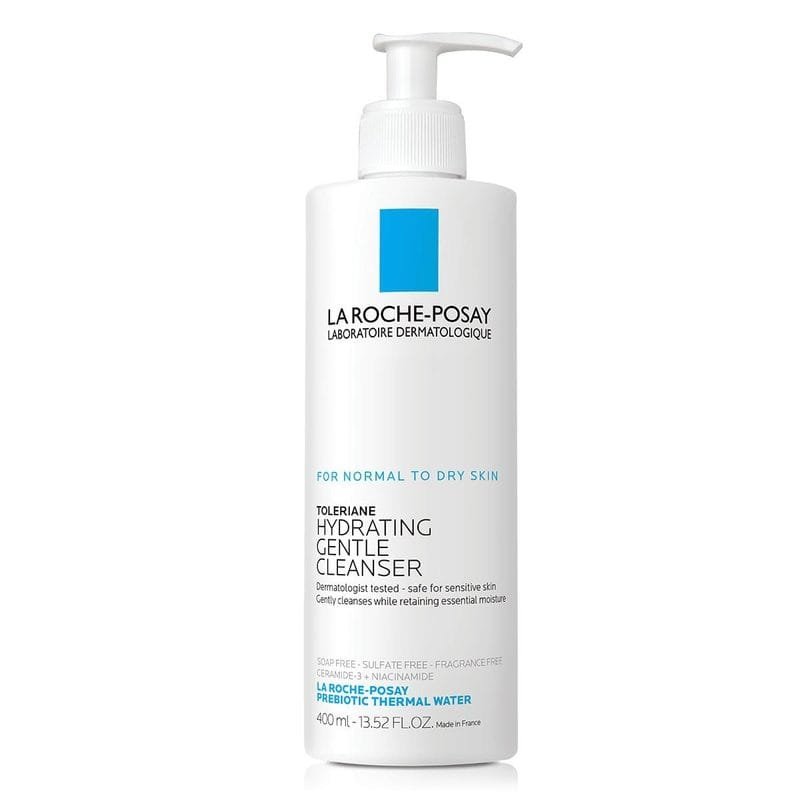
🛒 La Roche-Posay Toleriane Hydrating Gentle Cleanser — The best cleanser for dry sensitive skin.
Step 2 — Layer Hydration With Hyaluronic Acid
Even dry skin benefits from hyaluronic acid — but the application method is critical. Apply to very damp skin within 60 seconds of cleansing. The HA draws the surface moisture into the outer skin layers.
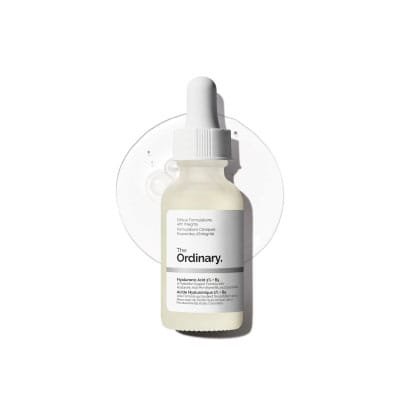
🛒 The Ordinary Hyaluronic Acid 2% + B5 — Best HA serum for dry skin. Multi-weight HA plus ceramides.
Step 3 — Apply Ceramide-Rich Moisturizer
Ceramides are the lipid molecules that make up the skin barrier. Dry skin is specifically deficient in these barrier lipids. A ceramide-rich moisturizer replaces what dry skin cannot produce—creating a functional barrier that holds moisture in.
🛒 CeraVe Moisturizing Cream — Most dermatologist-recommended dry skin moisturizer. Three essential ceramides and MVE technology.
🛒 La Roche-Posay Lipikar Balm AP+ — Best rich moisturizer for very dry skin.
Step 4 — Add an Occlusive Layer at Night
For very dry skin—add a thin layer of squalane or petrolatum (Vaseline) as the final night step. These occlusives create a physical seal over the moisturizer that prevents overnight moisture evaporation dramatically.
🛒 The Ordinary 100% Plant-Derived Squalane — Best facial oil for dry skin sealing.
How to Fix Dehydrated Skin — Complete Guide
Dehydrated skin treatment focuses on restoring barrier function so the skin can retain water—and providing water-based hydration while the barrier repairs itself.
Step 1 — Stop Damaging the Barrier: Dry vs Dehydrated Skin
The most important first step is identifying and removing what caused dehydration: Dry vs Dehydrated Skin
Switch to a gentle, pH-balanced cleanser immediately
Stop all alcohol-based toners and astringents
Reduce exfoliation frequency to a maximum of once per week
Stop using hot water—always lukewarm
If using retinol, reduce frequency while barrier repairs
Step 2 — Apply Hyaluronic Acid to Damp Skin
This is the primary active treatment for dehydrated skin. Apply hyaluronic acid serum to slightly damp skin within 60 seconds of cleansing — before any other product.
Critical rule: Always follow with moisturizer immediately. HA without a sealing moisturizer on top draws moisture to the surface and then allows it to evaporate, worsening dehydration in dry climates.
🛒 The Ordinary Hyaluronic Acid 2% + B5 — Best affordable HA serum for dehydrated skin.
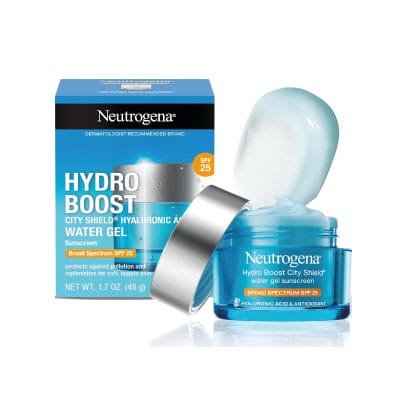
🛒 Neutrogena Hydro Boost Water Gel — Best gel moisturizer for dehydrated oily skin.
🛒 Torriden Dive-In Low Molecular Hyaluronic Acid Serum — Best Korean HA serum for deep dehydration.
Step 3 — Use Barrier-Repairing Ingredients
Dehydrated skin has a damaged barrier. These ingredients repair it:
Ceramides—Rebuild the lipid barrier that retains water Niacinamide stimulates ceramide synthesis and reduces inflammation Panthenol (B5) — Supports healing and water retention Centella asiatica — Calms inflammation and supports barrier repair
🛒 CeraVe Moisturizing Cream — Best ceramide moisturizer for barrier repair in dehydrated skin.
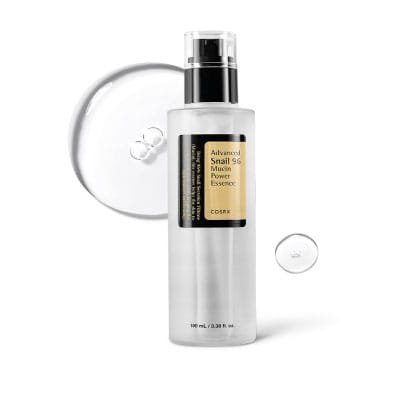
🛒 COSRX Advanced Snail 96 Mucin Power Essence — Best essence for barrier repair and dehydration.
Step 4 — The 7-Skin Method for Severe Dehydration
For severely dehydrated skin, the Korean 7-skin method provides intensive rehydration: Dry vs Dehydrated Skin
- Apply a thin hydrating toner or essence to damp skin
- Press gently into skin—do not rub
- Apply again — the second layer
- Apply again — third layer
- Continue up to 7 thin layers
- Seal with moisturizer
Each thin layer is fully absorbed before the next, creating compounded hydration that goes significantly deeper than one thick application. Dry vs Dehydrated Skin
Can You Have Both Dry AND Dehydrated Skin?
Yes—and this is actually quite common. Dry skin that is also dehydrated is the most uncomfortable skin condition because it lacks both oil and water simultaneously. Dry vs Dehydrated Skin
Signs of dry AND dehydrated skin: Dry vs. dehydrated skin
Constant tight and uncomfortable feeling
Flaking that does not improve with regular moisturizer
Fine lines that appear both at rest and when skin is compressed
Products absorb immediately but skin never feels comfortable
Persistent dullness despite regular moisturizing
Treatment for dry AND dehydrated skin:
- Hyaluronic acid serum on damp skin — for water
- Rich ceramide cream immediately after—for lipid barrier
- Squalane or petrolatum as final night layer — for occlusive seal
- Never use foaming cleansers—cream or oil cleansers only
- SPF 50 every morning — UV worsens both conditions
The Biggest Mistakes That Keep Skin Dry or Dehydrated
Mistake 1 — Drinking more water and expecting visible skin improvement
The connection between water intake and skin hydration is much weaker than most people believe. Drinking extra water beyond adequate daily intake does not meaningfully improve skin hydration—because the body prioritizes internal organs over the outer skin layer. Topical hydration is the primary solution for dehydrated skin. Dry vs Dehydrated Skin
Mistake 2 — Using a facial mist throughout the day without sealing
Spritzing water or toner mist on skin without immediately applying moisturizer afterward actually increases dehydration—the water evaporates and takes some existing surface moisture with it. If using a facial mist, always apply moisturizer within 60 seconds.
Mistake 3 — Over-exfoliating dehydrated skin
Exfoliation increases skin cell turnover, which temporarily increases barrier permeability and moisture loss. Dehydrated skin is already losing moisture faster than it should. Adding exfoliation without significantly increasing barrier support worsens dehydration. Maximum once-per-week exfoliation for dehydrated skin.
Mistake 4 — Skipping moisturizer on oily skin
The most common cause of dehydrated oily skin. Oil-free moisturizer provides the water-based hydration that prevents the dehydration-sebum-overproduction cycle. Dry vs Dehydrated Skin
Mistake 5 — Not wearing SPF
UV radiation damages the skin barrier directly—causing the trans-epidermal water loss that creates and maintains dehydration. Daily SPF 50 is as important for dehydrated skin management as any moisturizer.
What is the difference between dry skin and dehydrated skin?
Dry skin is a skin type where your sebaceous glands produce insufficient oil—resulting in a lack of lipids in the skin barrier. Dehydrated skin is a temporary skin condition where the outer skin layer lacks water—which can affect any skin type, including oily skin. Dry skin lacks oil. Dehydrated skin lacks water. They require different treatments—emollients and occlusives for dry skin, and humectants and barrier repair for dehydrated skin. Dry vs Dehydrated Skin
Can oily skin be dehydrated?
Yes, this is one of the most common and most misunderstood skin conditions. Oily and dehydrated are not opposites. Dehydrated oily skin is extremely common—particularly in people who use harsh cleansers, alcohol-based toners, or over-exfoliate. Oily skin can simultaneously lack water while overproducing sebum—and the dehydration often triggers even more oil production as the skin attempts to compensate for perceived moisture loss. Dry vs Dehydrated Skin
Final Thoughts — The Distinction That Changes Everything
Dry skin versus dehydrated skin is the skincare distinction that most people spend years confused about, and it explains why so many skincare routines fail to deliver the results they promise. Dry vs Dehydrated Skin
If you have dry skin, you need oil. Ceramides to rebuild the barrier. Squalane to seal it. Rich cream moisturizers to replace the lipids your sebaceous glands cannot produce. Gentle cleansers that never strip. Occlusive layers at night.
If you have dehydrated skin, you need water. Hyaluronic acid on damp skin. Immediate moisturizer to seal. Barrier repair with ceramides and niacinamide. A gentler approach to cleansing and exfoliation. And critically, the end of whatever barrier-disrupting habit caused the dehydration in the first place. Dry vs Dehydrated Skin
If you have both, you need both solutions simultaneously, applied in the correct order. Dry vs Dehydrated Skin