
What Does Azelaic Acid Do? ?Azelaic acid is the most underrated ingredient in skincare—and one of the most clinically versatile. While vitamin C and retinol dominate beauty conversations, azelaic acid has been quietly prescribed by dermatologists for over 30 years to treat conditions that most other ingredients cannot address: rosacea, post-acne hyperpigmentation, inflammatory acne, and melasma—often simultaneously.
In 2026 azelaic acid has finally reached the mainstream skincare conversation it deserves—and with good reason. It is one of the rare active ingredients that is safe during pregnancy, appropriate for the most sensitive skin types, effective across multiple skin concerns simultaneously, and available in both prescription and over-the-counter formulations.
What Is Azelaic Acid?
Azelaic acid is a naturally occurring dicarboxylic acid—found in grains including wheat, barley, and rye and produced by Malassezia yeast on the skin surface. Despite its natural origin, the azelaic acid used in skincare is synthesized rather than extracted—allowing for consistent purity and concentration.
Unlike AHAs (glycolic, lactic) and BHA (salicylic acid), which are primarily exfoliants, azelaic acid is classified as a multifunctional active with documented antibacterial, anti-inflammatory, comedolytic, and melanin-inhibiting properties. This multi-mechanism activity is what makes it uniquely effective for conditions that require simultaneous intervention at multiple pathways.
Available concentrations:
OTC (over the counter): 5% to 10%—increasingly available in serums and creams
Prescription: 15% gel (Finacea) and 20% cream (Azelex)—stronger for severe conditions
1. Kills Acne-Causing Bacteria—Antibacterial Activity
What Does Azelaic Acid Do? Azelaic acid has documented bacteriostatic and bactericidal activity against Cutibacterium acnes (C. acnes)—the bacteria primarily responsible for inflammatory acne. It disrupts bacterial protein synthesis—preventing bacteria from replicating and directly killing existing bacteria at sufficient concentrations.
Critically—unlike topical antibiotic treatments (clindamycin, erythromycin)—C. acnes does not develop resistance to azelaic acid. Resistance to antibiotic acne treatments is a growing clinical problem. Azelaic acid’s mechanism does not trigger resistance—making it a durable long-term acne management tool.
2. Reduces Inflammation—Anti-Inflammatory Activity
Azelaic acid reduces the production of reactive oxygen species (ROS)—the inflammatory molecules that white blood cells release when they detect acne bacteria. By reducing ROS production, azelaic acid calms the inflammatory cascade that creates the redness, swelling, and pain of inflamed acne lesions.
What Does Azelaic Acid Do? This anti-inflammatory mechanism extends beyond acne—it is the primary reason azelaic acid is clinically effective for rosacea, where chronic low-grade inflammation drives persistent facial redness, flushing, and the papulopustular lesions of rosacea subtypes 2 and 3.
3. Fades Dark Spots—Tyrosinase Inhibition
Azelaic acid is a competitive inhibitor of tyrosinase—the enzyme responsible for converting tyrosine to DOPA and ultimately to melanin. By blocking tyrosinase activity, azelaic acid reduces melanin production—gradually fading existing dark spots and preventing new hyperpigmentation from forming.
What makes azelaic acid’s melanin inhibition particularly valuable is its selectivity: it preferentially inhibits tyrosinase in abnormally active melanocytes (the cells producing excess melanin in dark spots) while having less effect on normally active melanocytes. This selective activity means it fades dark spots without significantly affecting normal skin tone—reducing the uneven lightening risk associated with some other brightening ingredients.
This targeted mechanism makes azelaic acid particularly effective for: What Does Azelaic Acid Do
Post-inflammatory hyperpigmentation (PIH) from acne
Melasma—one of the most treatment-resistant forms of hyperpigmentation
Sun spots and age spots
Uneven skin tone from any cause
4. Normalizes Pore Cell Turnover—Comedolytic Activity
Azelaic acid is keratolytic at the pore level—it normalizes the abnormal keratinization (cell accumulation) inside the pore lining that creates comedones. Unlike BHA, which dissolves existing comedone contents, azelaic acid prevents the abnormal cell buildup that allows comedones to form in the first place.
This comedolytic activity works synergistically with its antibacterial action—addressing both the structural (comedone formation) and bacterial (C. acnes proliferation) drivers of acne simultaneously.
5. Reduces Rosacea Symptoms—Specific Anti-Rosacea Mechanism
Beyond its general anti-inflammatory activity, azelaic acid has specific documented mechanisms for rosacea management. It reduces the abnormal activation of kallikrein 5 (KLK5)—a skin enzyme that is overactive in rosacea-prone skin and that produces cathelicidins, the antimicrobial peptides responsible for the chronic inflammation, visible blood vessel dilation, and skin sensitivity characteristic of rosacea.
This KLK5 inhibition is azelaic acid’s most specific anti-rosacea mechanism—one that few other skincare ingredients address. Clinical trials of prescription azelaic acid 15% gel (Finacea) show significant reduction in rosacea lesion count, facial redness, and papulopustular activity compared to vehicle control. What Does Azelaic Acid Do
Azelaic Acid for Acne: What Does Azelaic Acid Do
How it works: Azelaic acid addresses acne through three simultaneous mechanisms—killing C. acnes bacteria, reducing the inflammation that creates painful red lesions, and normalizing pore cell turnover to prevent new comedone formation.
Clinical evidence: Multiple randomized controlled trials show azelaic acid 20% cream reduces inflammatory acne lesion count comparably to topical erythromycin and tetracycline antibiotics—without the resistance concerns that limit antibiotic durability.
Best use case for acne: What Does Azelaic Acid Do
Mild to moderate inflammatory acne (papules and pustules)
Acne in pregnancy—azelaic acid is considered safe during pregnancy, unlike many acne treatments
Acne-prone skin that is too sensitive for benzoyl peroxide or high-concentration salicylic acid
Post-acne dark spot management—simultaneously treating active acne and fading marks from previous breakouts
🛒 The Ordinary Azelaic Acid Suspension 10%—Best OTC azelaic acid for acne. Silicone-based suspension for even delivery.
Azelaic Acid for Rosacea: What Does Azelaic Acid Do
How it works: Azelaic acid’s KLK5 inhibition reduces the cathelicidin cascade driving rosacea inflammation. Its anti-inflammatory and antibacterial activity reduces the papulopustular lesions of rosacea subtypes 2 and 3. And it addresses post-inflammatory redness without the irritation risk that most active ingredients pose for the sensitized skin of rosacea sufferers.
Clinical evidence: Finacea (azelaic acid 15% gel) is FDA-approved specifically for rosacea treatment—one of the few ingredients with this regulatory distinction. Clinical trials show a 50% or greater reduction in papulopustular rosacea lesion count in most trial participants.
Best use case for rosacea: What Does Azelaic Acid Do
Papulopustular rosacea (subtypes 2 and 3) with both redness and active lesions
Rosacea-associated hyperpigmentation
Maintaining rosacea remission after prescription treatment
Timeline for rosacea: Redness reduction is visible at 4 to 6 weeks. Lesion clearance at 8 to 12 weeks. Maximum improvement at 3 months. What Does Azelaic Acid Do
Azelaic Acid for Dark Spots and Hyperpigmentation
How it works: Selective tyrosinase inhibition—reducing melanin production in abnormally active melanocytes while preserving normal skin tone. Particularly effective for PIH (post-acne marks) and melasma.
Clinical evidence: What Does Azelaic Acid Do? Multiple studies show azelaic acid 20% cream produces comparable depigmentation to hydroquinone 4% in treating melasma—with significantly better tolerability and safety profile. Hydroquinone is more rapidly effective but has significant side effects and long-term safety concerns that azelaic acid does not share.
Best use case for dark spots: What Does Azelaic Acid Do
Post-acne hyperpigmentation—fading the dark marks left after acne clears
Melasma—particularly for people who cannot tolerate hydroquinone
Pregnancy-safe brightening—azelaic acid can be used throughout pregnancy.
Sensitive skin brightening—tolerated where vitamin C or kojic acid cause irritation
Timeline for dark spots: Initial brightening at 6 to 8 weeks. Significant spot fading at 12 weeks. Full treatment effect at 3 to 6 months of consistent daily use.
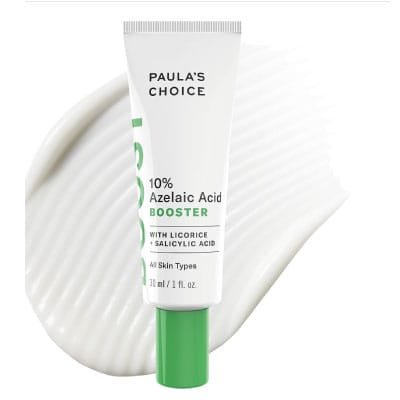
🛒 Paula’s Choice 10% Azelaic Acid Booster—The best azelaic acid for dark spots and hyperpigmentation. 10% concentration with supporting brightening actives.
Azelaic Acid for Sensitive Skin: What Does Azelaic Acid Do
Why it is ideal: The irony of many brightening and acne-treating ingredients is that they irritate the skin types that most need them. Vitamin C at high concentration causes stinging on sensitive skin. Benzoyl peroxide causes significant dryness and peeling. Retinol requires a long adjustment period of significant sensitivity.
Azelaic acid provides comparable benefits to many of these ingredients—antibacterial, anti-inflammatory, and brightening—with dramatically lower irritation potential. For sensitive skin that cannot tolerate standard acne or brightening treatments, azelaic acid is often the ingredient that finally delivers results without constant barrier disruption.
Best use case for sensitive skin: What Does Azelaic Acid Do
Sensitive skin with acne—can be used where benzoyl peroxide is too irritating
Rosacea-prone skin that reacts to most actives
Sensitive skin with PIH—fades marks without irritating the surrounding healthy skin
Azelaic Acid for Oily Skin: What Does Azelaic Acid Do
What Does Azelaic Acid Do? Azelaic acid’s comedolytic activity and antibacterial mechanism make it directly relevant for oily, acne-prone skin. It does not regulate sebum production (niacinamide and BHA are more targeted for this), but it prevents the pore-clogging and bacterial activity that oily skin drives.
What Does Azelaic Acid Do? For oily skin, azelaic acid works best in combination with niacinamide (for sebum regulation) and BHA (for active pore clearing), rather than as a standalone oily skin treatment. What Does Azelaic Acid Do
Where It Goes in Your Routine
Azelaic acid is typically applied at the serum or treatment step—after cleansing and toning, before moisturizer.
Morning routine: Cleanser → Toner → Azelaic acid serum → Niacinamide → Moisturizer → SPF 50
Night routine: Double cleanse → Toner → Azelaic acid serum → Niacinamide → Moisturizer
Morning or Night? What Does Azelaic Acid Do
Azelaic acid can be used both morning and night—unlike AHAs and retinol, which are restricted to night use.
Morning use: Provides ongoing antibacterial and anti-inflammatory activity throughout the day. Safe under SPF—no photosensitivity concerns.
Night use: Works alongside the skin’s overnight repair cycle. Particularly effective for melasma when combined with daily morning SPF.
Twice-daily use produces faster results than once-daily for most skin concerns—particularly for melasma and PIH.
How Much to Use: What Does Azelaic Acid Do
A pea-sized to two-pea-sized amount covers the entire face. The Ordinary Azelaic Acid Suspension is a thick silicone-based formula—a pea-sized amount is sufficient. More product does not increase results—it only wastes product.
The Introduction Schedule: What Does Azelaic Acid Do
What Does Azelaic Acid Do? Azelaic acid has a very gentle introduction curve compared to most actives:
Week 1: Once daily—either morning or night Week 2: Twice daily if no irritation Month 2 onward: Twice daily consistently
Azelaic Acid + Niacinamide ✅ Excellent combination
The most effective combination for dark spots and uneven skin tone. Azelaic acid blocks melanin production (tyrosinase inhibition). Niacinamide blocks melanin transfer (inhibits melanosome transfer from melanocytes to keratinocytes). Two separate pathways targeting the same problem—significantly faster results than either alone.
Apply azelaic acid first, then niacinamide on top. Both morning and night.
Azelaic Acid + Vitamin C ✅ Complementary
Three separate brightening mechanisms: azelaic acid (tyrosinase inhibition), vitamin C (tyrosinase inhibition + antioxidant), and niacinamide (melanin transfer inhibition). Use vitamin C in the morning and azelaic acid in the morning and evening.
Azelaic Acid + Retinol ✅ Can combine—alternating nights
Azelaic acid and retinol address acne through different mechanisms and complement each other well. To avoid potential over-exfoliation for sensitive skin, use azelaic acid on some nights and retinol on alternating nights.
Azelaic Acid + BHA ✅ Complementary for acne
Azelaic acid addresses the bacterial and inflammatory component of acne. BHA addresses the comedone and pore-clearing component. Together they cover every stage of the acne cycle. Alternate nights (BHA 3 nights, azelaic acid every morning, and remaining nights).
Azelaic Acid + Benzoyl Peroxide 🟡 Use with caution
Both are antibacterial. Using them together may provide enhanced bacterial killing but also increases dryness and irritation risk. If combining, use benzoyl peroxide in the morning and azelaic acid at night rather than simultaneously.
Best Budget—The Ordinary Azelaic Acid Suspension 10%
At under $12—the most accessible 10% azelaic acid available. The silicone-based suspension delivers even coverage and good adherence to the skin surface. The thick texture takes adjustment—apply to slightly damp skin and blend thoroughly for the most comfortable application.
🛒 The Ordinary Azelaic Acid Suspension 10%—the best budget azelaic acid. 10% concentration at a drugstore price.
Best Premium—Paula’s Choice 10% Azelaic Acid Booster
What Does Azelaic Acid Do? A more elegant texture than The Ordinary formula—silky gel-cream that blends easily and absorbs completely without the silicone heaviness. Contains azelaic acid alongside licorice root extract and salicylic acid for additional brightening and mild exfoliation.
🛒 Paula’s Choice 10% Azelaic Acid Booster—Best premium OTC azelaic acid for dark spots and acne.
Best for Rosacea—Finacea 15% Azelaic Acid Gel (Prescription)
The only FDA-approved azelaic acid specifically for rosacea. Requires a dermatologist prescription. If you have diagnosed rosacea, discuss Finacea with your dermatologist before committing to OTC alternatives.
Best for Sensitive Skin—Skinoren 20% Azelaic Acid Cream (Prescription)
Available by prescription in Europe and some other markets—the highest concentration of azelaic acid available and the most documented for severe acne and melasma. Requires a dermatologist’s prescription.
Best OTC Serum Format—Naturium Azelaic Acid Emulsion 10%
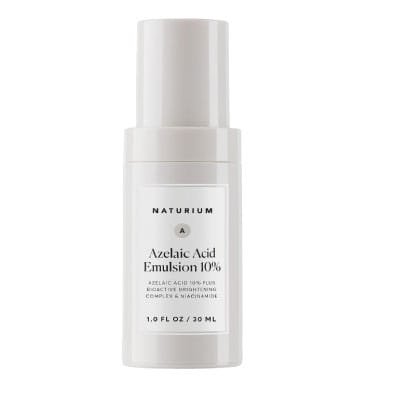
Water-based emulsion format that applies more easily than suspension formulas—absorbs quickly without the silicone heaviness of the The Ordinary version. Good for oily skin that finds silicone-based formulas too occlusive.
🛒 Naturium Azelaic Acid Emulsion 10%—The best azelaic acid serum for oily skin. Light emulsion texture.
Azelaic Acid Side Effects — What to Expect
Common and Normal
Mild tingling or warmth: Some users experience brief tingling in the first few weeks of use—particularly when applied to active acne lesions. This typically resolves as skin adjusts. If tingling is persistent or uncomfortable, reduce frequency temporarily.
Initial flushing: Rarely, some users experience brief transient flushing in the first 1 to 2 weeks. This resolves with continued use.
Less Common: What Does Azelaic Acid Do
Temporary skin lightening of treated areas: The selective tyrosinase inhibition occasionally produces noticeable lightening of treated dark spots before surrounding skin tone normalizes. This resolves with continued even application.
When to Stop: What Does Azelaic Acid Do
Persistent burning, stinging, or redness beyond the first 2 weeks—discontinue and consult a dermatologist. True allergic contact dermatitis to azelaic acid is rare but possible.
Azelaic Acid During Pregnancy — Important Information
Azelaic acid is one of the few active skincare ingredients considered safe during pregnancy across all three trimesters. It is classified as Pregnancy Category B—meaning animal studies have not shown fetal harm, and it is not absorbed systemically in significant amounts from topical application.
This makes it particularly valuable because pregnancy often triggers or worsens: What Does Azelaic Acid Do
Melasma (the “mask of pregnancy”)
Acne from hormonal changes
Rosacea flares
And most effective treatments for these conditions (retinol, hydroquinone, and high-dose salicylic acid) are contraindicated during pregnancy. Azelaic acid provides effective treatment for all three concerns without the safety concerns of alternatives.
What does azelaic acid do for skin?
Azelaic acid simultaneously provides antibacterial activity against acne-causing bacteria, anti-inflammatory reduction of the redness and swelling of acne and rosacea, tyrosinase inhibition for fading dark spots and preventing new hyperpigmentation, and comedolytic normalization of pore cell turnover that prevents new comedone formation. No other single OTC ingredient addresses all four of these pathways simultaneously—making azelaic acid uniquely versatile for complex skin concerns.
How long does azelaic acid take to work?
What Does Azelaic Acid Do? Initial reduction in inflammation and redness is visible at 4 to 6 weeks. Significant acne lesion clearance at 8 to 12 weeks. Visible dark spot fading at 8 to 12 weeks. Full brightening and clearing results develop at 3 to 6 months of consistent twice-daily use. The brightening effects are slower than some alternatives but more durable because they address the melanin production mechanism rather than just accelerating surface cell turnover.
Is azelaic acid safe for sensitive skin?
Yes—it is one of the most appropriate active ingredients for sensitive skin because of its very low irritation potential combined with its anti-inflammatory mechanism. It is particularly well-suited for rosacea-prone skin that reacts to most other actives. Start at once daily and build to twice daily over 2 weeks if any initial tingling occurs.
Final Thoughts — Why Azelaic Acid Deserves More Attention
What Does Azelaic Acid Do? Azelaic acid has been hiding in plain sight for years in dermatology offices for conditions that stumped other treatments—while being largely absent from mainstream skincare discussions dominated by vitamin C, retinol, and hyaluronic acid.
The reason it is finally receiving the attention it deserves in 2026 is simple: it does things that no other single OTC ingredient does. It kills acne bacteria without triggering resistance. It calms rosacea through a specific mechanism that addresses the root pathway of the condition. It fades dark spots through selective tyrosinase inhibition that targets abnormal melanocytes while preserving normal skin tone. And it does all of this at an irritation level appropriate for the skin types—sensitive, rosacea-prone, pregnant—that most need these benefits and can tolerate virtually nothing else.