Quick Summary (Top Picks): serum for sensitive skin
If you are in a hurry, here are our dermatologist-informed top recommendations:
| Category | Our Pick | Why You’ll Love It |
|---|---|---|
| Best Overall Serum | Aveeno Calm + Restore Serum | Oat-based, it instantly soothes and strengthens the barrier. |
| Best Budget Serum | *The Ordinary Hyaluronic Acid 2% + B5* | Basic, no-nonsense hydration for under $10. |
| Best for Redness | Dr. Jart+ Cicapair Serum | Centella asiatica works magic on visible redness. |
| Best for Dry Sensitive Skin | SkinFix Barrier+ Serum | Lipid-rich formula with peptides and niacinamide. |
| Best Lightweight Serum | Peach & Lily Glass Skin Serum | Watery texture that hydrates without a single gram of weight. |
Best Serum for Sensitive Skin (Top Products)
We have analyzed hundreds of user reviews, ingredient lists, and dermatologist recommendations. Here are the top five products that are safe for reactive complexions.
Best Overall Serum: Aveeno Calm + Restore Triple Oat Serum
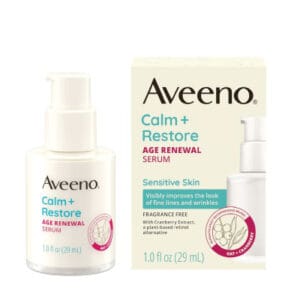
This serum has become a cult classic for a reason. Aveeno has harnessed the power of prebiotic oat to create a formula that works with your skin’s microbiome rather than against it.
Key ingredients:
Colloidal Oatmeal: An FDA-approved skin protectant that calms itching and irritation.
Niacinamide (Vitamin B3): Helps rebuild healthy skin cells while improving the barrier.
Ceramides: Essential lipids that fill the “gaps” in your skin barrier to lock moisture in.
Pros & cons:
Pros: Fragrance-free, alcohol-free, dye-free; absorbs instantly; works under makeup; approved by the National Eczema Association.
Cons: It is a thinner consistency than some expect (though this reduces pulling); it has a slightly higher price point than drugstore basics.
Top Affordable Serum: The Ordinary Hyaluronic Acid 2% + B5
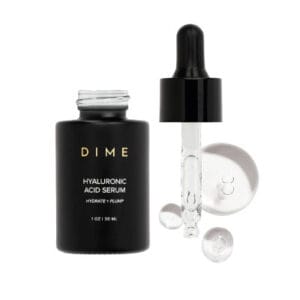 Affordable option: At roughly $8.90, this serum proves that gentle skincare doesn’t have to cost a fortune. It is minimalist in design and ingredient list, making it perfect for those terrified of reactions.
Lightweight & gentle: This formula uses three forms of hyaluronic acid (low, medium, and high molecular weight) to hydrate at multiple levels of the skin. Vitamin B5 (panthenol) supports wound healing and reduces surface redness.
Pros & cons:
Pros: Incredible price; vegan; cruelty-free; no common irritants; very easy to layer with moisturizer.
Cons: Can feel slightly “tacky” if you apply too much (use only 2 drops on damp skin); not enough on its own for extreme dryness—needs a cream on top.
Best for Redness & Irritation: Dr. Jart+ Cicapair Tiger Grass Serum
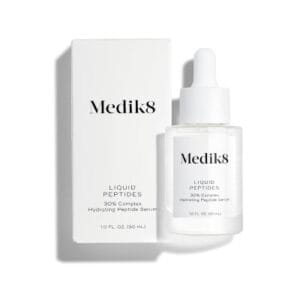
Soothing ingredients: For those who look like they just ran a marathon when they simply sat at a desk, this is your hero. The star is Centella Asiatica (aka tiger grass or cica), a medicinal herb proven to reduce inflammation, speed wound healing, and calm even the most furious flare-ups.
Pros & cons:
Pros: Visibly reduces redness after a few uses; contains a proprietary “Jartbiome” to balance the skin microbiome; soothing green tint helps color-correct on contact.
Cons: Expensive (the “splurge” pick); the herbal scent (while natural) might bother extremely scent-sensitive users; thick texture for a serum.
Best for Dry Sensitive Skin: SkinFix Barrier+ Triple Lipid-Peptide Cream Serum
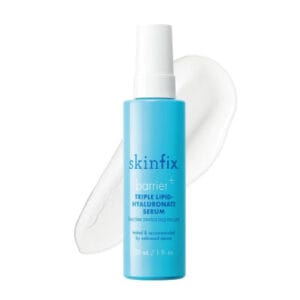
Deep hydration: If your sensitive skin is also flaky, scaly, or tight, you need lipids. This “cream-serum” hybrid is heavier than a traditional serum but lighter than a moisturizer.
Key ingredients:
Hyaluronic Acid & Glycerin: For immediate surface hydration.
Squalane: Mimics the skin’s natural oils without clogging pores.
Peptides & Ceramides: To rebuild the barrier and reduce transepidermal water loss.
Pros & cons:
Pros: Excellent for winter months; fragrance-free; recyclable packaging; clinically shown to improve hydration in 1 hour.
Cons: Because it is so rich, it might be too heavy for oily-sensitive skin; it takes 2 minutes to fully absorb.
Best Lightweight Serum: Peach & Lily Glass Skin Serum
Non-greasy formula: Sensitive skin can still get congested. This Korean beauty favorite gives you that “glass skin” glow without a single heavy or pore-clogging ingredient.
Good for oily-sensitive skin: If you are sensitive and acne-prone, many thick creams break you out. This water-gel serum hydrates with peach extract, niacinamide, and hyaluronic acid without adding oil. It actually helps regulate sebum production.
Pros & cons:
Pros: Creates a beautiful glow; minimizes the look of pores; contains soothing ingredients like willow bark (a gentle alternative to BHA); non-comedogenic.
Cons: Mid-range price; contains natural extracts that rarely bother the most extreme allergies (patch test first).
Product Comparison Table: Serum for sensitive skin
| Product Name | Best For | Skin Type | Key Ingredients | Price Range |
|---|---|---|---|---|
| Aveeno Calm + Restore | Overall Safety | Very dry, reactive | Colloidal Oat, Niacinamide | $$ |
| The Ordinary Hyaluronic | Budget | All sensitive types | HA, B5 | $ |
| Dr. Jart+ Cicapair | Redness | Rosacea, inflamed | Centella Asiatica | $$$ |
| SkinFix Barrier+ | Dryness | Flaky, mature | Peptides, Lipids, Squalane | $$$ |
| Peach & Lily Glass Skin | Lightweight | Oily-sensitive | Peach extract, Niacinamide | $$ |
What to Look for in a Serum for Sensitive Skin
Shopping for a serum when your skin hates everything is nerve-wracking. Don’t look at the marketing claims (“Glow!” “Firm!” Look at the ingredients panel. Here is your checklist.
Gentle & Minimal Ingredients: Choosing the Right Serum for Sensitive Skin
When selecting a serum for sensitive skin, a simple formula is often the best choice. Products with fewer ingredients reduce the chance of irritation and help maintain your skin’s natural barrier.
Fragrance-Free
Choose serums without added fragrance, including essential oils such as lavender, eucalyptus, peppermint, or citrus extracts. While these ingredients may smell pleasant, they are common triggers for redness and irritation in sensitive skin.
Free of Drying Alcohols
Avoid products containing drying alcohols like alcohol denat., SD alcohol, or isopropyl alcohol, as they can weaken the skin barrier and increase sensitivity. Moisturizing fatty alcohols such as cetyl alcohol and cetearyl alcohol are safe and can actually help soften the skin.
No Artificial Dyes
Artificial colors provide no skincare benefits and may increase the risk of irritation. Dye-free formulas are a better option for delicate skin.
Hydrating Ingredients That Support Sensitive Skin
Sensitive skin often struggles to retain moisture, making hydration one of the most important factors when choosing a serum. Look for ingredients that attract and lock in water while calming irritation.
Hyaluronic Acid (Sodium Hyaluronate): Delivers long-lasting hydration by drawing moisture into the skin, leaving it plump and comfortable.
Glycerin: A gentle, highly effective humectant that helps prevent dryness and supports a healthy skin barrier.
Panthenol (Pro-Vitamin B5): Provides deep hydration while helping calm redness, soothe irritation, and strengthen the skin’s protective barrier.
Barrier Repair Ingredients: serum for sensitive skin
If your barrier is broken, you must fix the wall before you paint the room.
Ceramides: These are the “mortar” between your skin cells. Without them, your barrier leaks.
Niacinamide: At concentrations of 2-5%, it is a powerhouse. It increases ceramide production, reduces redness, and regulates oil. (Note: Some cannot tolerate 10%+—stick to lower percentages).
Squalane: An oil that mimics human sebum. It’s non-comedogenic and anti-inflammatory.
These ingredients help repair the skin barrier, reduce inflammation, and lock in moisture.
Ingredients to Avoid in Serums: serum for sensitive skin
Even if a serum claims to be “for sensitive skin,” always scan for these red flags:
Fragrance (Parfum): The number one cause of cosmetic contact dermatitis.
Alcohol (Denat., SD Alcohol): Strips the barrier, causes stinging, and leads to rebound oiliness.
Retinol (for beginners): While great for anti-aging, retinol increases cell turnover, which causes purging, peeling, and redness initially. If you have sensitive skin, start with Bakuchiol (a plant-based alternative).
Strong Acids (AHA/BHA): Glycolic acid (tiny molecules) penetrates too deep and fast for sensitive skin. Lactic or mandelic acid is gentler, but even those should be used once a week max.
(Harsh actives can increase irritation in sensitive skin.)
How to Apply Serum for Sensitive Skin
Application technique matters just as much as the product itself. Rubbing or using too much can negate all the benefits.
Apply after cleanser serum for sensitive skin: After washing your face, pat it dry but leave it slightly damp. Hydrating serums work best when there is surface water to pull into the skin.
Use 2–3 drops of serum for sensitive skin: More serum does not equal better results. It just increases the chance of stickiness or irritation. Dispense into your palm.
Pat gently (don’t rub) serum for sensitive skin: Use your ring fingers (weakest fingers) to pat the serum into your cheeks, forehead, and chin first. Rubbing causes friction, which can trigger histamine release (redness).
Follow with moisturizer: Within 60 seconds of applying the serum, lock it in with a gentle moisturizer. The moisturizer seals the hydration and serum actives into the skin.
(Serums should be applied before moisturizer for best absorption.)
Expert Tips for Sensitive Skin: serum for sensitive skin
Beyond buying the right bottle, here is how to maintain resilience:
Always patch test: We cannot say this enough. Apply a new serum behind your ear or on your inner elbow for 3-5 days before putting it on your face.
Keep routine simple: Cleanser + Serum + Moisturizer + Sunscreen. That is it. “Skin cycling” and 10-step routines are disasters for reactive skin.
Avoid over-layering products: Using a hyaluronic acid serum, then a niacinamide toner, then a vitamin C moisturizer is a chemical cocktail. Stick to one active serum per routine.
Use sunscreen daily: Sensitive skin is vulnerable to UV damage, which looks like redness and brown spots. Use a mineral sunscreen (zinc oxide/titanium dioxide) as chemical sunscreens are common irritants.
Can I use serum every day? serum for sensitive skin
Yes, if it’s gentle and hydrating. Hydrating serums (HA and glycerin) are safe for AM and PM daily use. Treatment serums (like low-dose niacinamide) are also safe daily. If you feel stinging, reduce to every other day.
Which serum is best for redness? serum for sensitive skin
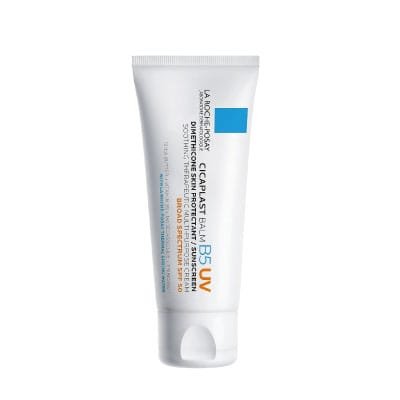
Look for calming ingredients like aloe, centella (cica), or oat. Our top pick for redness is Dr. Jart+ Cicapair. Cheaper alternatives include Purito Centella Unscented Serum or La Roche-Posay Cicaplast Serum.
Is niacinamide safe for sensitive skin? serum for sensitive skin
Yes, in low concentrations (2-5%), it helps calm and strengthen skin. Problems occur when people buy 10% or 15% niacinamide serums (common from The Ordinary). High doses cause flushing and stinging in sensitive users. Stick to formulations where niacinamide is 4th or 5th on the ingredient list.
Is vitamin C safe for sensitive skin? serum for sensitive skin
Generally, no—pure L-ascorbic acid is too acidic (low pH) for sensitive skin. However, derivatives like Tetrahexyldecyl Ascorbate (THD) or Magnesium Ascorbyl Phosphate (MAP) are pH-neutral and very gentle. Also, look for 3-O-ethyl ascorbic acid.
Can I use retinol if I have sensitive skin?
Yes, but carefully. Never use prescription tretinoin. Start with encapsulated retinol (slow-release) or Bakuchiol. Use the “sandwich method”: Moisturizer -> Pea-sized retinol -> Moisturizer. Do this once a week for a month.
Why do serums sting my face?
Stinging usually means your skin barrier is compromised OR you have applied an acidic serum (Vitamin C/AHA) to wet skin. Stop all activities. Use only a gentle cleanser, a barrier repair serum (like Aveeno), and a thick moisturizer for two weeks.
Gentle & Minimal Ingredients
The “less is more” philosophy is the golden rule. The best serum for sensitive skin should have a short ingredient list.
Fragrance-free: This includes “natural” fragrances from essential oils (lavender, eucalyptus, citrus). These are common sensitizers.
Alcohol-free: Avoid SD alcohol, denatured alcohol, or isopropyl alcohol. (Fatty alcohols like cetyl alcohol are fine—they are moisturizers).
Dye-free: Colorants serve no purpose for sensitive skin.
Preservatives: Yes, you need them to prevent bacteria. Phenoxyethanol and ethylhexylglycerin are generally safe. Avoid methylisothiazolinone (MI/MCI) – a known allergen.
Hydrating Ingredients :serum for sensitive skin
Sensitive skin is usually thirsty skin. Water is not enough; you need humectants to pull water into the skin.
Hyaluronic Acid: Holds 1000x its weight in water. Look for “sodium hyaluronate” for low molecular weight penetration. Multi-weight HA is best.
Glycerin: The gold standard humectant. Almost never causes allergies. It is often the second or third ingredient in gentle serums.
Panthenol (Pro-Vitamin B5): Hydrates and actively soothes inflammation and itching. It also improves wound healing.
Sodium PCA & Amino Acids: Natural moisturizing factors (NMFs) that your skin already produces. Supplementing them helps maintain hydration.
Barrier Repair Ingredients : serum for sensitive skin
If your barrier is broken, you must fix the wall before you paint the room.
Ceramides: These are the “mortar” between your skin cells. Without them, your barrier leaks. Look for ceramide NP, AP, or EOP.
Niacinamide: At concentrations of 2-5%, it is a powerhouse. It increases ceramide production, reduces redness, and regulates oil. (Note: Some cannot tolerate 10%+—stick to lower percentages).
Squalane: An oil that mimics human sebum. It’s non-comedogenic and anti-inflammatory. It also prevents trans-epidermal water loss.
serum for sensitive skin
Even if a serum claims to be “for sensitive skin,” always scan for these red flags: serum for sensitive skin (
Fragrance (Parfum): The number one cause of cosmetic contact dermatitis. Includes “limonene,” “linalool,” and “citronellol”—these are fragrant compounds.
Alcohol (Denat., SD Alcohol, Isopropyl Alcohol): Strips the barrier, causes stinging, and leads to rebound oiliness. Exception: fatty alcohols like cetyl, stearyl, and cetearyl are safe.
Retinol (for beginners): While great for anti-aging, retinol increases cell turnover, which causes purging, peeling, and redness initially. If you have sensitive skin, start with Bakuchiol (a plant-based alternative) or encapsulated retinol at 0.1% max.
Strong Acids (AHA/BHA): Glycolic acid (tiny molecules) penetrates too deep and fast for sensitive skin. Lactic or Mandelic acid are gentler, but even those should be used once a week max. Salicylic acid (BHA) can be drying.
Essential Oils: Tea tree, peppermint, eucalyptus, clove, and citrus oils are common irritants. Even lavender can sensitize over time.
Sulfates (SLS/SLES): Rare in serums but sometimes present as emulsifiers. Avoid. serum for sensitive skin (
Urea (high concentration): While great for eczema at 5%, urea at 10%+ can sting sensitive skin.
(Harsh actives can increase irritation in sensitive skin.)serum for sensitive skin
Reviews
There are no reviews yet.