
Two ingredients dominate the skincare conversation more than any others in 2026: niacinamide and vitamin C. Both are backed by decades of clinical research. Both are universally recommended by dermatologists. Both visibly transform skin with consistent use. And both are available in hundreds of products at every price point from budget to luxury.
But which one is actually better for your skin? Should you use niacinamide or vitamin C? Can you use both together? Which one works for dark spots? Which is better for oily skin? Which delivers faster results? Niacinamide vs Vitamin C
These are the questions this complete guide answers, comparing niacinamide vs. vitamin C across every skin concern, every skin type, and every routine scenario. By the end you will know exactly which ingredient belongs in your routine, or whether you need both
What Is Niacinamide? Niacinamide vs Vitamin C
Niacinamide is the amide form of vitamin B3, a water-soluble vitamin that occurs naturally in many foods and has been extensively studied as a topical skincare ingredient since the 1990s. It is one of the most versatile, most widely researched, and most universally tolerated active ingredients in all of skincare. Niacinamide vs Vitamin C
How Niacinamide Works on Skin: Niacinamide vs Vitamin C
Niacinamide works through multiple mechanisms simultaneously, which is what makes it uniquely versatile:
Regulates sebum production: At 10% concentration, niacinamide directly reduces sebum excretion rate by up to 55% with consistent daily use. This makes it the most effective non-prescription ingredient for oily skin and the best option for niacinamide vs vitamin C for oily skin. Niacinamide vs Vitamin C
Strengthening the skin barrier, niacinamide stimulates ceramide synthesis, the production of the lipid molecules that hold the skin barrier together and prevent moisture loss. A stronger barrier means less sensitivity, less dehydration, and better tolerance of other active ingredients.
Fades dark spots. Niacinamide inhibits the transfer of melanosomes (melanin packages) from melanocytes to keratinocytes, preventing existing melanin from reaching the skin surface and preventing new dark spots from forming. This makes it a key player in the niacinamide vs. vitamin C for dark spots debate. Niacinamide vs Vitamin C
Reduces redness and inflammation. Niacinamide has significant anti-inflammatory properties that calm the redness, swelling, and irritation of acne, rosacea, and reactive skin.
Minimizes pore appearance. By reducing sebum production and improving skin elasticity around pore openings, niacinamide visibly minimizes the appearance of enlarged pores over 6 to 8 weeks.
Supports anti-aging Niacinamide stimulates collagen production and protects against oxidative stress that breaks down collagen fibers. Niacinamide vs Vitamin C
What Is Vitamin C?
Vitamin C—most potently in its pure form as L-ascorbic acid—is the most clinically studied antioxidant in skincare history. It is a naturally occurring vitamin that the human body cannot synthesize, requiring both dietary intake and topical application for skin-specific benefits.
How Vitamin C Works on Skin
Neutralizing free radicals, vitamin C is the most powerful antioxidant in the skin, neutralizing the free radicals generated by UV radiation and pollution that break down collagen and cause oxidative aging. Applied every morning under SPF, it provides a chemical shield against environmental damage.
Stimulates collagen synthesis. Vitamin C is an essential cofactor in collagen synthesis, meaning your body literally cannot produce collagen without it. Topical vitamin C at 15% concentration has been clinically shown to significantly increase collagen production in the dermis over 12 weeks.
Brightens and fades dark spots. Vitamin C inhibits the enzyme tyrosinase, which is responsible for converting tyrosine into melanin. By blocking this enzyme, vitamin C both fades existing dark spots and prevents new ones from forming. This makes it a key contender in niacinamide vs. vitamin C for dark spots. Niacinamide vs Vitamin C
Enhances SPF protection: Applied under sunscreen, vitamin C provides additional antioxidant protection that studies show amplifies the photoprotective effect of SPF by up to 200%. This vitamin C and sunscreen combination is the most powerful daily anti-aging protocol available without a prescription.
Improves skin texture: Niacinamide vs Vitamin C. By stimulating cell turnover and collagen synthesis, vitamin C gradually smooths skin texture, improving the appearance of rough patches, enlarged pores, and uneven surfaces.
Niacinamide vs Vitamin C for Dark Spots
Both niacinamide and vitamin C fade dark spots but through different biological pathways:
Vitamin C blocks tyrosinase, the enzyme that produces melanin, at the very beginning of the melanin production process. This upstream blocking action makes vitamin C more powerful for significant, established dark spots. Studies show 15% vitamin C produces visible dark spot reduction within 8 weeks.
Niacinamide blocks melanin transfer, preventing already-produced melanin from reaching the skin surface. This downstream blocking is less powerful for deeply established spots but prevents new spots from appearing very effectively.
Winner for dark spots: Vitamin C, for fading existing significant hyperpigmentation Winner for preventing new spots: Niacinamide, combined with SPF daily. ,Niacinamide vs Vitamin C
Best approach for dark spots: Use vitamin C in the morning with SPF for maximum brightening and protection. Use niacinamide morning and night to prevent new spots and support even skin tone. Together they address dark spots from two different mechanisms far more effectively than either alone.
Niacinamide vs Vitamin C for Oily Skin
This comparison has a clear winner. Niacinamide vs Vitamin C
Niacinamide directly reduces sebum production at the sebaceous gland level, communicating with oil-producing cells to reduce their output by up to 55% with consistent 10% niacinamide use over 4 to 8 weeks. Nothing else available over the counter approaches this level of oil control.
Vitamin C does not significantly affect sebum production. It brightens and protects, but it does not target the oiliness that causes shine and enlarged pores. Niacinamide vs Vitamin C
Winner for oily skin: Niacinamide, by a wide margin
For the full oily skin routine: use niacinamide morning and night for oil control and vitamin C in the morning under SPF for protection and brightening.
Niacinamide vs Vitamin C for Anti-Aging
Both are excellent anti-aging ingredients, but they work through different mechanisms:
Vitamin C is arguably the more powerful anti-aging ingredient because it stimulates collagen synthesis directly (as an essential cofactor in the enzymatic process of collagen production) and neutralizes the free radical damage from UV radiation that is the primary cause of visible aging. At 15% concentration, applied every morning with SPF, vitamin C is the most effective over-the-counter anti-aging protocol available. Niacinamide vs Vitamin C
Niacinamide supports anti-aging by strengthening the skin barrier (preventing the barrier disruption that accelerates aging), stimulating ceramide production, and providing anti-inflammatory protection against the chronic low-level inflammation that contributes to skin aging. Niacinamide vs Vitamin C
Winner for anti-aging: Vitamin C, primarily because of its direct collagen synthesis role and antioxidant protection from UV
Niacinamide vs Vitamin C for Acne
Niacinamide wins clearly for acne. It reduces sebum production that fuels acne formation, calms the inflammation that makes breakouts red and painful, strengthens the barrier that prevents bacterial invasion, and fades the post-acne dark spots that persist after breakouts heal. A clinical study even found 4% niacinamide comparable to 1% clindamycin (a prescription antibiotic) for acne lesion reduction. Niacinamide vs Vitamin C
Vitamin C is less directly useful for active acne, though its anti-inflammatory properties help reduce redness and its brightening properties fade post-acne marks over time.
Winner for acne: Niacinamide
Niacinamide vs Vitamin C for Sensitive Skin
Niacinamide wins clearly for sensitive skin. It is one of the gentlest active ingredients available, working at any pH, suitable for twice-daily use from day one, and rarely causing any irritation at 10% concentration. It is specifically recommended for rosacea-prone skin because of its anti-inflammatory properties.
Vitamin C, particularly pure L-ascorbic acid at 15% or higher, can cause tingling, redness, and irritation on sensitive skin because of its low pH requirement. Gentler vitamin C derivatives (ascorbyl glucoside and sodium ascorbyl phosphate) are available but are less potent than pure L-ascorbic acid.
Winner for sensitive skin: Niacinamide — pure L-ascorbic acid is not ideal for sensitive skin Note: Vitamin C derivatives are safe for sensitive skin; look for ascorbyl glucoside or magnesium ascorbyl phosphate in formulas for sensitive skin
Niacinamide vs Vitamin C for Beginners
Niacinamide wins for beginners because it is stable, gentle, easy to use, works at any pH, and does not require any special handling or storage. You can apply it morning and night from day one without an adjustment period. Niacinamide vs Vitamin C
Vitamin C requires more care, proper storage in dark, airtight packaging away from heat, correct timing in your routine, and awareness that pure L-ascorbic acid formulas may cause initial tingling. Niacinamide vs Vitamin C
Winner for beginners: Niacinamide
Can You Use Niacinamide and Vitamin C Together?
This is the most asked question about these two ingredients, and the answer in 2026 is definitively yes.
An old concern existed that combining niacinamide and vitamin C would create nicotinic acid (niacin), which causes flushing. However, modern research has confirmed that this reaction requires extremely high temperatures and concentrations that are not achievable through normal topical application at room temperature. The concern was theoretical and has not been replicated in clinical conditions.
Niacinamide and vitamin C together are not only compatible; they are complementary.
Niacinamide calms any potential irritation from vitamin C
Both inhibit melanin through different pathways, doubling their dark spot-fading effect
Niacinamide’s barrier-strengthening effect enhances vitamin C penetration
Vitamin C’s antioxidant effect complements niacinamide’s anti-inflammatory action
How to Use Niacinamide and Vitamin C Together
Option 1, Layer them (most common approach): Apply vitamin C serum first (thinner, more acidic), allow 60 seconds, then apply niacinamide serum on top. Both in the morning under SPF. Niacinamide vs Vitamin C
Option 2, Split AM/PM: Vitamin C in the morning, niacinamide morning and night.
Option 3, Use a product that combines them. Several excellent serums now combine both ingredients; Paula’s Choice C15 Super Booster and some Olay formulas include both niacinamide and vitamin C in one product. Niacinamide vs Vitamin C
Never do: Apply niacinamide first, then vitamin C. Vitamin C needs to go closest to clean skin for maximum absorption.
Best Niacinamide Products
1. The Ordinary Niacinamide 10% + Zinc 1% — Best Budget
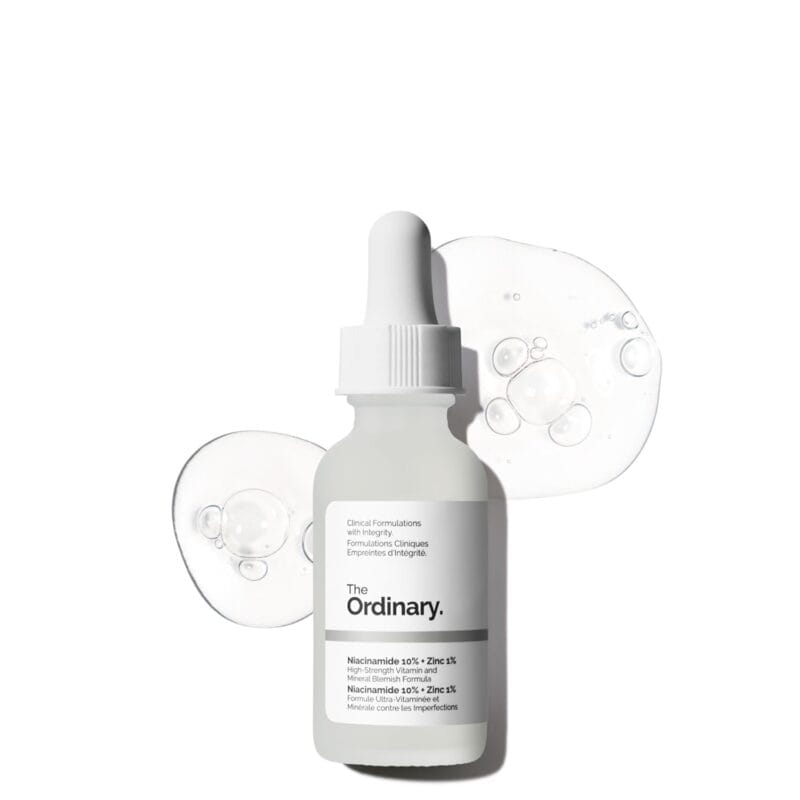
The world’s bestselling niacinamide serum. 10% niacinamide plus zinc PCA for maximum oil control and pore minimization. The best starting point for anyone adding niacinamide to their routine.
The Ordinary Niacinamide 10% + Zinc 1% — Best affordable niacinamide serum.
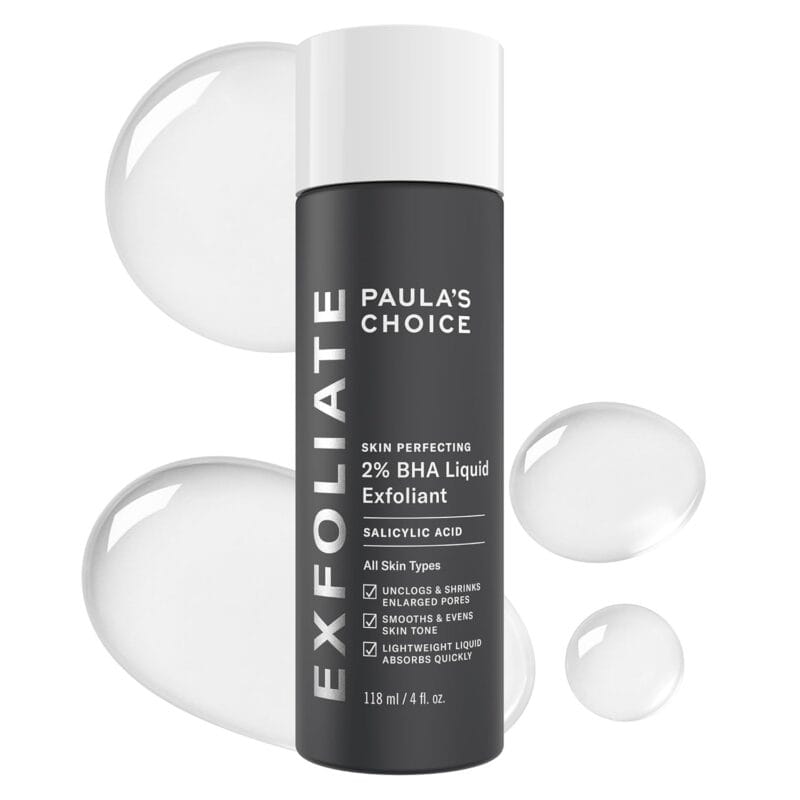
2. Paula’s Choice 10% Niacinamide Booster — Best Premium
Niacinamide with vitamin C and hyaluronic acid in one serum. Best for brightening while controlling oil.
Paula’s Choice 10% Niacinamide Booster — Best premium niacinamide serum.
3. La Roche-Posay Toleriane Ultra Niacinamide Serum — Best for Sensitive Skin
10% niacinamide with prebiotic thermal water and neurosensine peptide. Best niacinamide serum for rosacea and reactive skin.
La Roche-Posay Toleriane Ultra Serum — Best niacinamide serum for sensitive skin.
4. Olay Regenerist Micro-Sculpting Cream — Best Niacinamide Moisturizer
Niacinamide plus amino peptides in a rich anti-aging cream. Best for mature skin combining niacinamide with anti-aging benefits.
Olay Regenerist Micro-Sculpting Cream,Best niacinamide moisturizer for anti-aging.
Best Vitamin C Products
1. SkinCeuticals C E Ferulic — Best Vitamin C Serum Overall
15% L-ascorbic acid with vitamin E and ferulic acid. The gold standard vitamin C serum, the most studied, most clinically proven brightening serum available.
SkinCeuticals C E Ferulic The best vitamin C serum overall.
2. TruSkin Vitamin C Serum — Best Affordable Vitamin C
Sodium ascorbyl phosphate with vitamin E and hyaluronic acid. Best affordable vitamin C for beginners and sensitive skin.
TruSkin Vitamin C Serum — Best affordable vitamin C serum.
3. The Ordinary Ascorbyl Glucoside 12% — Best Budget Vitamin C
Stable vitamin C derivative at a remarkable price. Best for beginners who want vitamin C without irritation risk.
The Ordinary Ascorbyl Glucoside 12%, the best budget vitamin C serum.
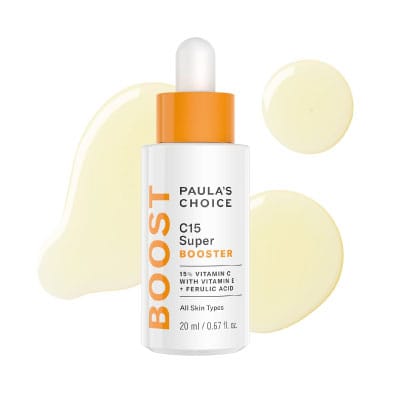
4. Paula’s Choice C15 Super Booster — Best Value Premium Vitamin C
15% L-ascorbic acid with vitamin E and ferulic acid, comparable to SkinCeuticals at a lower price point.
Paula’s Choice C15 Super Booster, the best value premium vitamin C serum.
The Perfect Routine — Using Both Together
Here is the complete morning and night routine using both niacinamide and vitamin C correctly:
Night Routine — Repair Focus
Why vitamin C only in the morning: Vitamin C is most valuable when it can neutralize the free radicals generated by UV and pollution during the day. At night this protection is unnecessary, and retinol is more effective for nighttime repair.
Why niacinamide morning and night: Niacinamide is gentle enough for twice-daily use, and its oil-control and barrier-strengthening effects are cumulative—more applications equal faster and more significant results.
Which is better — niacinamide or vitamin C?
Neither is universally better; they serve different primary purposes and are most effective when used together. Niacinamide is better for oily skin, acne-prone skin, and sensitive skin because of its sebum regulation, anti-inflammatory properties, and extreme gentleness. Vitamin C is better for brightening, significant dark spot fading, collagen stimulation, and antioxidant protection against UV damage. For most people, the best approach is vitamin C every morning and niacinamide morning and night.
Can I use niacinamide and vitamin C at the same time?
Yes, the old concern that combining them creates irritating nicotinic acid has been debunked by modern research. They are compatible, complementary, and produce better results together than either alone. Apply vitamin C first on clean skin, allow 60 seconds, then apply niacinamide serum. Follow with moisturizer and SPF 50.
Which is better for dark spots — niacinamide or vitamin C?
Vitamin C is more powerful for fading established dark spots because it blocks melanin production at the source (tyrosinase inhibition). Niacinamide prevents existing melanin from reaching the skin surface and prevents new spots from forming. For maximum dark spot results, use both: vitamin C in the morning for active fading and niacinamide morning and night for prevention and maintenance. Always use SPF 50 daily, UV exposure undoes all dark spot fading work.
Which works faster — niacinamide or vitamin C?
Niacinamide shows results faster for oily skin, pore size, and redness, typically within 4 to 6 weeks. Vitamin C requires 8 to 12 weeks of consistent use to show significant brightening and collagen improvement. For immediate visible improvement in skin tone and texture, start with niacinamide. Add vitamin C for long-term brightening and anti-aging.
Can I use niacinamide in the morning and vitamin C at night?
You can, but it is not the optimal approach. Vitamin C is most valuable in the morning when it can neutralize the free radicals generated by daytime UV and pollution exposure. At night your skin is not exposed to these oxidative stressors, so vitamin C’s antioxidant benefit is wasted. Use vitamin C every morning and niacinamide morning and night for the best results from both ingredients.
Final Thoughts
The niacinamide vs vitamin C debate has a clear answer; you do not have to choose. These two ingredients are the most clinically supported, most accessible, and most universally beneficial active ingredients in skincare. They work through different mechanisms, target different aspects of skin health, and are most powerful when used together.
Use vitamin C every morning, before moisturizer and before SPF, to neutralize free radicals, stimulate collagen, and fade dark spots with the most powerful antioxidant in skincare.
Use niacinamide every morning and night to regulate oil, minimize pores, strengthen your barrier, calm inflammation, and maintain an even skin tone year-round.
Always finish with SPF 50 every morning. Vitamin C and niacinamide both fade dark spots and protect skin, but UV radiation creates new spots faster than any ingredient can fade them. SPF is non-negotiable.