
AHA vs BHA: Chemical exfoliation is one of the most transformative categories in modern skincare—and one of the most confusing. AHA versus BHA appears on product labels, in skincare community discussions, and in dermatologist recommendations constantly—but most people using these ingredients do not actually understand the difference between them, why it matters, or which one their specific skin actually needs.
This guide fixes that completely. By the end you will understand exactly what AHA and BHA are, how they work differently at the molecular level, which one is right for your skin concerns, how to introduce them safely, and which specific products are worth buying in 2026.
What Is Chemical Exfoliation? AHA vs BHA
Before comparing AHA and BHA, understanding what chemical exfoliation actually does explains why both acids matter. AHA vs BHA
Your skin naturally sheds dead skin cells through a process called desquamation. Young skin does this efficiently every 28 days. As we age—or when skin is oily, congested, sun-damaged, or otherwise compromised—this shedding slows down. Dead skin cells accumulate on the surface rather than sloughing off naturally. AHA vs BHA
The result: dull skin, rough texture, clogged pores, uneven skin tone, and fine lines that appear more pronounced because the skin surface is not smooth.
Physical exfoliation—scrubs, brushes, and physical tools—removes this buildup through friction. Chemical exfoliation—AHAs and BHAs—dissolves the bonds that hold dead skin cells together, allowing them to release naturally without any friction or abrasion.
Chemical exfoliation is consistently preferred by dermatologists over physical exfoliation because it is more even, more controllable, and less likely to cause microtears in the skin surface that physical scrubbing can create.
What Is AHA?—Alpha Hydroxy Acid Explained
AHAs are a family of water-soluble acids derived primarily from natural sources—fruits, milk, and sugarcane—that exfoliate the skin surface by dissolving the bonds between dead skin cells. AHA vs BHA
Common AHA types:
| AHA Type | Source | Molecular size | Best for |
|---|---|---|---|
| Glycolic acid | Sugarcane | Smallest—deepest penetration | Anti-aging, texture, brightening |
| Lactic acid | Milk | Larger—gentler | Sensitive skin, dry skin |
| Mandelic acid | Almonds | Largest—gentlest | Very sensitive skin, beginners |
| Tartaric acid | Grapes | Medium | Combination skin |
| Citric acid | Citrus | Medium | Brightening, antioxidant |
| Malic acid | Apples | Medium | Texture, brightening |
How AHAs work:
AHAs break down the desmosomes—the molecular structures that hold corneocytes (dead skin cells) together on the skin surface. When these bonds dissolve, the dead cells release, and the fresher, brighter cells underneath are revealed.
Because AHAs are water-soluble, they work primarily on the skin surface—the outer layers of the epidermis. They do not penetrate inside the pore. AHA vs BHA
What AHAs address: AHA vs BHA
Surface skin texture and roughness
Dull, uneven skin tone
Post-acne marks and hyperpigmentation (through accelerated cell turnover)
Fine lines and surface wrinkles (through cell renewal and some collagen stimulation at higher concentrations)
Dry and rough skin (particularly lactic acid)
Sun damage and age spots
What Is BHA?—Beta Hydroxy Acid Explained
BHA refers primarily to one acid: salicylic acid. Unlike AHAs, salicylic acid is oil-soluble. This single chemical property is what makes it fundamentally different from every AHA and uniquely effective for a specific set of skin concerns. AHA vs BHA
The key BHA:
| BHA Type | Notes |
|---|---|
| Salicylic acid | The primary BHA—oil-soluble pore-penetrating exfoliant |
| Beta-hydroxybutanoic acid | Less common—similar mechanism |
How BHA works: AHA vs BHA
Because salicylic acid is oil-soluble, it can mix with the sebum (oil) inside the pore and travel along the pore lining to reach the interior of the pore. This is something no AHA can do. Water-soluble AHAs are repelled by the oil-lined pore wall. AHA vs BHA
Inside the pore, salicylic acid dissolves the mixture of sebum and dead keratinocytes that form blackheads, whiteheads, and the microcomedones that become inflammatory acne. AHA vs BHA
BHA also has mild anti-inflammatory properties that reduce the redness of active breakouts—an additional benefit AHAs do not provide.
What BHAs address: AHA vs BHA
Blackheads—dissolved from inside the pore
Whiteheads—cleared through pore lining exfoliation
Enlarged pores—pore walls contract when contents are cleared
Sebaceous filaments—the grey threads visible in nose pores
Inflammatory acne—both clearing congestion and reducing inflammation
Oily skin—reduces sebum buildup throughout the day
AHA vs. BHA—The Core Difference
| Feature | AHA | BHA |
|---|---|---|
| Solubility | Water-soluble | Oil-soluble |
| Works on | Skin surface | Inside the pore |
| Primary concern | Texture, tone, brightening | Blackheads, congestion, oiliness |
| Anti-inflammatory | No | Yes—mild |
| Penetration depth | Surface epidermis | Inside the follicle |
| Best for | Dry, dull, aging, sun-damaged | Oily, acne-prone, congested |
| UV sensitivity | Significantly increases | Increases—less than AHA |
| Morning use | Not recommended without SPF | Not recommended without SPF |
| Pregnancy | Generally acceptable (low dose) | Use with caution—discuss with OB |
AHA vs BHA for Specific Skin Types and Concerns
AHA vs BHA for Oily Skin
Winner: BHA—clearly : AHA vs BHA
Oily skin’s primary problems are excess sebum, clogged pores, and the blackheads and acne that follow. All of these are driven by what happens inside the pore—which is where BHA works and AHA cannot reach.
Salicylic acid at 2% leave-on concentration is the most effective OTC treatment for oily skin congestion. Used consistently 3 to 4 nights per week—it continuously clears the sebum that refills pores daily.
AHA is not wrong for oily skin—glycolic acid’s cell turnover benefits address the post-acne marks and dullness that oily skin is prone to. But if you can only use one—BHA first.
Best combination for oily skin: BHA toner 3 nights per week + AHA toner once per week on a separate night for brightening
AHA vs BHA for Dry Skin: AHA vs BHA
Winner: AHA—specifically lactic acid
Dry skin does not typically have the pore congestion and excess sebum that makes BHA particularly valuable. What dry skin needs is surface cell renewal to remove the dull, rough dead cell buildup that accumulates more on dry skin than any other type.
Lactic acid is the ideal AHA for dry skin—its larger molecular size exfoliates more gently than glycolic acid, and lactic acid is also a natural humectant that adds mild hydration alongside exfoliation. This dual action makes it uniquely appropriate for skin that needs exfoliation without dehydration.
Glycolic acid at moderate concentrations (5 to 7%) also works well for dry skin—but always follow with rich ceramide moisturizer immediately after. AHA vs BHA
Best AHA for dry skin: Lactic acid 5 to 10% · The Inkey List Lactic Acid · The Ordinary Lactic Acid 5% + HA
AHA vs BHA for Acne-Prone Skin
Winner: BHA for active acne—AHA for post-acne marks
This is where understanding the distinction matters most. AHA vs BHA
For preventing and clearing active acne: BHA (salicylic acid) is far superior. It addresses the root cause—pore congestion from sebum buildup—from inside the pore. AHA cannot reach this.
For fading post-acne hyperpigmentation (dark marks left after pimples): AHA is more effective. Glycolic acid’s accelerated cell turnover brings fresher, less pigmented skin cells to the surface faster—visibly fading dark marks.
Ideal acne-prone skin approach: AHA vs BHA
BHA 3 nights per week—prevent and clear active breakouts
AHA 1 night per week—fade existing dark marks from past breakouts
Never AHA and BHA on the same night
AHA vs BHA for Dark Spots and Hyperpigmentation
Winner: AHA
Both exfoliants accelerate cell turnover, which fades hyperpigmentation—but AHAs provide more direct and more powerful brightening effects. Glycolic acid’s small molecular size allows it to penetrate to the layers where melanin accumulates, and higher concentrations of glycolic acid have been shown to inhibit tyrosinase—one of the enzymes involved in melanin production.
For dark spots, combine AHA exfoliation with niacinamide serum (blocks melanin transfer) and vitamin C serum (blocks melanin production at the source) for the most comprehensive multi-pathway approach.
AHA vs BHA for Anti-Aging
Winner: AHA—especially glycolic acid: AHA vs BHA
Glycolic acid has the most research-supported anti-aging mechanism of any OTC exfoliant. At concentrations above 10%, glycolic acid stimulates collagen production in the dermis (the deep skin layer where structural collagen lives). Studies show increased collagen and elastin synthesis with consistent long-term glycolic acid use. AHA vs BHA
The cell turnover acceleration from AHA also reduces the appearance of fine lines by maintaining a fresher, more even skin surface. And the brightening effect from accelerated pigment cell removal creates a clearer, more youthful-looking complexion.
BHA has some anti-aging benefits through pore-minimizing and texture-improving effects—but these are secondary to AHA for a pure anti-aging focus.
AHA vs BHA for Sensitive Skin
Winner: Depends on formulation—AHA (lactic or mandelic) is generally gentler.
Standard BHA at 2% can be irritating for very sensitive skin. But gentle BHA formulas at 0.5 to 1%—or BHA pads with lower acid concentration—are often well-tolerated.
For extremely sensitive skin, mandelic acid is the gentlest exfoliating option available. Its large molecular size means it penetrates very slowly — providing effective exfoliation with minimal irritation potential.
Gentlest options by irritation risk: AHA vs BHA
Mandelic acid (AHA)—lowest
Lactic acid 5% (AHA)—low
Salicylic acid 0.5% (BHA)—low-medium
Lactic acid 10% (AHA)—medium
Glycolic acid 7% (AHA)—medium
Salicylic acid 2% (BHA) — medium
Glycolic acid 10%+ (AHA)—higher
AHA vs BHA for Beginners
Winner: BHA for oily skin beginners—lactic acid for dry skin beginners
If you have oily or combination skin and have never used chemical exfoliants: Start with CeraVe SA Smoothing Cleanser (salicylic acid in a rinse-off format) for 2 weeks, then transition to a leave-on BHA toner at every 3rd night.
If you have dry or sensitive skin, start with The Ordinary Lactic Acid 5% + HA—the lowest-concentration option with added hyaluronic acid to offset any dryness.
Never start with both AHA and BHA simultaneously. Introduce one, establish tolerance over 4 weeks, then consider adding the other on alternating nights.
Can You Use AHA and BHA Together?
Yes—but with important rules. AHA vs BHA
On the same night—is it safe?
Using AHA and BHA on the same night is possible but not recommended for beginners or sensitive skin. The combination produces significantly more exfoliation than either alone—increasing the risk of over-exfoliation, barrier damage, and irritation.
The safest combination approach:
Option 1 — Alternate nights:
Monday: BHA
Tuesday: rest
Wednesday: AHA
Thursday: rest
Friday: BHA
Weekend: rest
Option 2 — Same night (experienced users only): Apply BHA first at the toner step. Wait 10 minutes. Apply AHA. Wait 5 minutes. Apply moisturizer. Use this maximum twice per week.
Option 3—Pre-formulated combination products: Products like Medicube Zero Pore Pads (AHA + BHA + PHA) or The Ordinary AHA 30% + BHA 2% Peeling Solution combine both in one formula calibrated for simultaneous use.
Never combine AHA or BHA with:
Retinol or tretinoin on the same night
Benzoyl peroxide in the same session (can cause irritation)
Other exfoliants (physical scrubs, enzyme peels)
How to Introduce AHA and BHA Into Your Routine
The Safe Introduction Protocol: AHA vs BHA
Weeks 1 to 2: Use your chosen acid every 3rd night only. This builds tolerance gradually without over-exfoliating.
Weeks 3 to 4: Increase to every other night if no irritation occurred in weeks 1 to 2.
Month 2 onward: Move to nightly use if tolerated—or maintain every other night indefinitely if nightly causes any sensitivity.
Morning vs Night
Always use AHA and BHA at night. Both acids:
Increase UV sensitivity significantly
Work during the skin’s overnight repair cycle when cell turnover peaks
Should not be applied before immediate sun exposure
If morning use is unavoidable, apply SPF 50 as the absolute final morning step with zero exceptions.
Signs of Over-Exfoliation—Stop Immediately
Persistent redness lasting more than 30 minutes after application
Burning or stinging that does not subside within 5 minutes
Significant peeling beyond mild flaking
Increased sensitivity to all products in your routine
Breakouts in new areas that are not your normal acne zones
If over-exfoliation occurs, discontinue all acids for 2 weeks. Use only gentle cleanser, ceramide moisturizer, and SPF. Reintroduce more slowly at a lower frequency.
The Best AHA Products in 2026
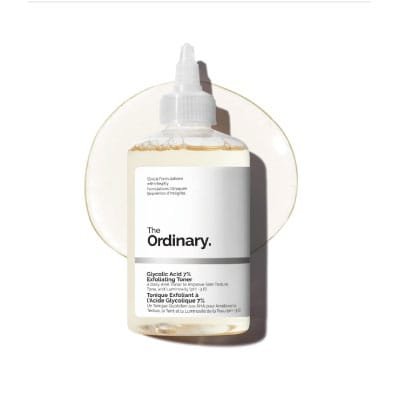
Best Glycolic Acid (AHA)—The Ordinary Glycolic Acid 7% Toning Solution
At 7% glycolic acid—the most affordable and most accessible entry into leave-on AHA exfoliation. Applied after cleansing on a cotton pad and left on overnight—it provides consistent surface brightening, texture improvement, and cumulative anti-aging benefit with 3 to 4 uses per week.
🛒 The Ordinary Glycolic Acid 7% Toning Solution—Best affordable AHA for texture and brightening
Best Lactic Acid (AHA)—The Ordinary Lactic Acid 5% + HA
The gentlest AHA for beginners and dry skin—5% lactic acid with hyaluronic acid that adds hydration alongside exfoliation. The perfect first chemical exfoliant for sensitive skin.
🛒 The Ordinary Lactic Acid 5% + HA—The best gentle AHA for dry and sensitive skin beginners.
Best AHA for Anti-Aging—The Inkey List Glycolic Acid Toner
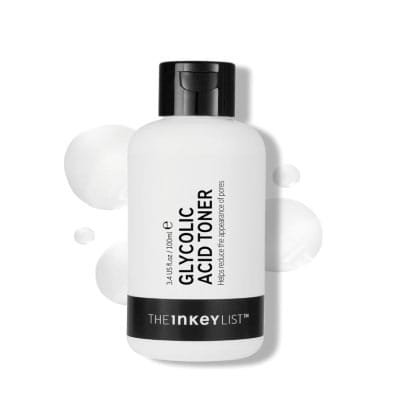
10% glycolic acid at a more aggressive concentration for experienced users wanting anti-aging collagen stimulation alongside surface brightening.
🛒 The Inkey List Glycolic Acid Toner—The best glycolic acid toner for anti-aging and textu
The Best BHA Products in 2026
Best BHA—Paula’s Choice Skin Perfecting 2% BHA Liquid
The gold standard leave-on BHA is 2% salicylic acid at pH 3.2 to 3.8—the optimal pH for maximum BHA efficacy. The most consistently dermatologist-recommended BHA product for oily, acne-prone, and congested skin.
🛒 Paula’s Choice 2% BHA Liquid Exfoliant—The gold standard BHA for pore clearing.
Best BHA for Beginners—COSRX AHA/BHA Clarifying Treatment Toner
atural BHA from willow bark at a lower effective concentration—gentler than the Paula’s Choice formula and appropriate for BHA beginners or those with mild congestion concerns.
🛒 COSRX AHA/BHA Clarifying Treatment Toner — Best Gentle BHA for Beginners.
Best AHA + BHA Combined — Medicube Zero Pore Pads
Pre-soaked pads delivering AHA (glycolic), BHA (salicylic), and PHA (gluconolactone) in one convenient application—the most comprehensive multi-acid exfoliant on the market. Two-sided pad design. Use at night 3 to 4 times per week.
🛒 Medicube Zero Pore Pads—Best AHA + BHA combination exfoliant pads.
Your Complete Routine With AHA and BHA
Oily and Acne-Prone Skin Routine
Monday/Wednesday/Friday—BHA nights: Cleanser → Paula’s Choice 2% BHA → Wait 5 to 10 minutes → Niacinamide serum → CeraVe PM Lotion
Tuesday/Thursday—Retinol nights: Cleanser → Niacinamide toner → Retinol → CeraVe PM Lotion
Saturday—AHA night: Cleanser → Glycolic acid toner → Niacinamide serum → Moisturizer
Every morning: CeraVe Foaming Cleanser → Niacinamide Serum → Oil-Free Moisturizer → SPF 50 always lasts
Dry and Sensitive Skin Routine
Monday / Thursday — Lactic acid (AHA) nights: Gentle cleanser → Lactic acid 5% → HA serum → Rich ceramide cream
Wednesday—Rest night: Cleanser → HA serum → CeraVe Moisturizing Cream
Every morning: Gentle cleanser → HA serum → Ceramide moisturizer → SPF 50 always lasts
Combination Skin Routine
Monday / Wednesday / Friday — BHA nights: Cleanser → BHA toner (focus on T-zone) → Niacinamide serum → Oil-free moisturizer
Tuesday—AHA night: Cleanser → Glycolic acid toner → HA serum → Moisturizer
Every morning: Cleanser → Vitamin C serum → Niacinamide → Moisturizer → SPF 50
What is the difference between AHA and BHA?
AHA (alpha hydroxy acid) is water-soluble and works on the skin surface—dissolving dead skin cell bonds to improve texture, brightness, and fine lines. BHA (beta hydroxy acid / salicylic acid) is oil-soluble and penetrates inside the pore—dissolving the sebum and dead cell mixture that creates blackheads, clogged pores, and acne. AHA = surface. BHA = inside the pore. This is the fundamental difference that determines which one your skin needs.
Which is better for acne—AHA or BHA?
BHA is significantly better for active acne. Salicylic acid’s oil solubility allows it to penetrate inside the pore and clear the congestion that causes breakouts—something no AHA can do. For post-acne dark marks left after breakouts resolve—AHA is more effective through accelerated cell turnover. For comprehensive acne care, use BHA regularly for prevention and clearing, and add AHA occasionally for brightening and dark mark fading.
Can I use AHA and BHA together?
Yes—alternating nights is the safest approach for most people. Use BHA on 3 nights per week and AHA on 1 night per week on alternating nights. Never on the same night unless you are an experienced acid user with established tolerance. Pre-formulated products combining both (like Medicube Zero Pore Pads) calibrate the combination for simultaneous safe use.
Which is better for oily skin—AHA or BHA?
BHA—clearly. Oily skin’s primary problems come from inside the pore. BHA penetrates there and dissolves excess sebum. AHA cannot reach this zone. Paula’s Choice 2% BHA Liquid used 3 nights per week is the most consistently effective OTC treatment for oily, congested skin.
Final Thoughts — AHA or BHA: Which One Does Your Skin Need?
The AHA vs BHA decision is simpler than it appears once you understand the core distinction:
Choose BHA (salicylic acid) if your primary concerns are blackheads, clogged pores, oily skin, active acne, sebaceous filaments, or enlarged pores. These are all inside-the-pore problems—and only oil-soluble BHA can reach them.
Choose AHA (glycolic, lactic, or mandelic acid) if your primary concerns are dull skin, rough texture, fine lines, sun damage, dark spots, or post-acne marks. These are surface and upper epidermal problems—exactly where AHAs work.