
Dark spots are one of the most frustrating skin concerns to treat. They form faster than they fade. They come back every time the sun hits your skin without SPF. And the ingredients most commonly recommended for them—vitamin C, kojic acid, and hydroquinone—either oxidize too quickly, irritate too easily, or carry long-term safety concerns that make dermatologists hesitant to recommend indefinite use.
Tranexamic acid changes this equation.
It is not the newest ingredient in skincare—it has been used in medicine for over 50 years as a systemic drug to reduce bleeding. But its emergence as a topical skincare active in the last decade has been genuinely significant—producing clinical results for hyperpigmentation, melasma, and dark spots that rival prescription hydroquinone with dramatically better tolerability and safety.
In 2026 tranexamic acid has become one of the most recommended ingredients by dermatologists for treating the most persistent forms of hyperpigmentation—and this guide explains exactly why, exactly how it works, and exactly which products are worth using.
What Is Tranexamic-Acid?
(TXA) is a synthetic amino acid derivative—specifically a lysine analog—that was developed in the 1960s as a medical hemostatic agent. Its primary clinical use is systemic—administered orally or intravenously to reduce bleeding by inhibiting fibrinolysis (the breakdown of blood clots).
The discovery of its depigmenting effects came from clinical observation: patients taking oral tranexamic-acid for medical purposes noticed significant improvement in melasma as a side effect. This observation prompted investigation into topical tranexamic acid—and subsequent research demonstrated that the topical form produces meaningful brightening and dark spot fading through a mechanism distinct from every other brightening ingredient.
Available forms in skincare:
Topical serum and cream: 2% to 5% concentration—most common OTC form
Oral supplement: Used in dermatology clinics for severe melasma
Injection: Clinical use for severe hyperpigmentation
How Does Tranexamic-Acid Work?—The Complete Mechanism
Tranexamic-acid’s brightening mechanism is fundamentally different from that of vitamin C, niacinamide, kojic acid, and most other brightening ingredients—which is why it works for dark spots and melasma that have not responded to other treatments.
The Plasmin Inhibition Pathway
The key to understanding tranexamic acid is understanding the role of plasmin in melanin production—a pathway that most other brightening ingredients do not address.
Step 1: UV radiation, hormones, and inflammation trigger keratinocytes (skin cells) to release arachidonic-acid.
Step 2: Arachidonic acid activates plasmin—a proteolytic enzyme normally involved in dissolving blood clots.
Step 3: Plasmin stimulates melanocytes (pigment cells) to produce more melanin through prostaglandin and thromboxane signaling.
Step 4: Excess melanin production creates hyperpigmentation—dark spots, melasma, and post-inflammatory marks.
How tranexamic-acid interrupts this: TX A blocks plasmin activity by binding to lysine-binding sites on plasminogen—preventing its conversion to active plasmin. Without plasmin activation, the UV- and inflammation-driven melanin production cascade is interrupted at an early stage.
This mechanism is completely separate from tyrosinase inhibition (the mechanism of vitamin C, kojic acid, and azelaic acid)—which is why tranexamic-acid works for hyperpigmentation that has not responded to tyrosinase inhibitors. It addresses a different pathway in the same end result.
Secondary Mechanisms:
Endothelin-1 inhibition: Tranexamic-acid reduces the production of endothelin-1—a signaling molecule that stimulates melanocytes independently of the plasmin pathway. This dual plasmin and endothelin-1 inhibition provides more comprehensive melanin production suppression than either pathway alone.
Anti-inflammatory activity: The inflammatory component of hyperpigmentation—particularly post-inflammatory hyperpigmentation from acne, eczema, and injury—is partially suppressed by tranexamic acid’s anti-inflammatory properties.
Tranexamic-Acid for Melasma
Melasma is the most treatment-resistant form of hyperpigmentation—driven by estrogen and progesterone receptor activity in melanocytes that causes chronic hyperstimulation of pigment production. This hormonal driver means that traditional tyrosinase inhibitors fade the surface pigment while the underlying stimulation continues—causing rapid recurrence when treatment stops.
Tranexamic-acid’s plasmin inhibition addresses melasma’s UV-triggered component—which is the primary external trigger that activates the hormonal signaling. Clinical evidence:
Multiple randomized controlled trials show oral tranexamic acid 250 mg twice daily produces significant melasma improvement with minimal side effects
Topical 5% tranexamic acid cream produces comparable results to 3% hydroquinone in 12-week trials
A combination of topical TXA with daily SPF 50 produces the most durable melasma improvement available without a prescription
For melasma, tranexamic acid is now considered a first-line treatment option by many dermatologists because of its efficacy combined with its superior safety profile versus hydroquinone.
Tranexamic-Acid for Post-Acne Dark Spots
Post-inflammatory hyperpigmentation (PIH)—the flat dark marks left after acne lesions heal—responds well to tranexamic-acid through both its plasmin inhibition (reducing inflammation-driven melanin stimulation) and its direct anti-inflammatory activity.
For acne-prone skin dealing with both active breakouts and residual dark marks, tranexamic acid is particularly valuable because it simultaneously reduces the inflammatory signal that creates new PIH while fading existing marks.
Best combination for acne PIH:
Tranexamic acid serum (morning and night)—reduces melanin production from inflammation
Niacinamide 10% (morning and night)—blocks melanin transfer
BHA toner (3 nights per week)—accelerates cell turnover
SPF 50 every morning—prevents UV from darkening fading spots
Tranexamic-Acid for Sun Spots and Age Spots
UV-triggered dark spots—solar lentigines, sun spots, and age spots—are driven by the exact UV → arachidonic acid → plasmin → melanin pathway that tranexamic acid specifically interrupts. This makes TXA particularly mechanistically appropriate for sun-damage-related hyperpigmentation.
For established sun spots—combining tranexamic acid with vitamin C provides dual-pathway fading: TXA interrupts UV-triggered melanin stimulation upstream while vitamin C inhibits tyrosinase downstream for more comprehensive results.
Tranexamic-Acid for Uneven Skin Tone
Beyond specific dark spots—tranexamic acid’s melanin production inhibition across UV-exposed skin produces a progressive evening of overall skin tone. Most users report that the entire complexion appears more uniform with consistent tranexamic acid use—not just specific spots fading. Tranexamic Acid
Tranexamic-Acid vs. Vitamin C
| Feature | Tranexamic Acid | Vitamin C |
|---|---|---|
| Primary mechanism | Plasmin inhibition | Tyrosinase inhibition |
| Stability | Very high | Low—oxidizes quickly |
| Irritation | Very low | Low to moderate |
| Melasma efficacy | ✅ Strong | 🟡 Moderate |
| Antioxidant | ❌ No | ✅ Yes |
| SPF amplification | ❌ No | ✅ Yes |
| Pregnancy | ✅ Generally safe | ✅ Safe |
| Price | $$ | to $$ |
Verdict: They work through completely different pathways—combining both provides more comprehensive dark spot treatment than either alone. Use vitamin C in the morning for antioxidant and tyrosinase inhibition. Use tranexamic acid morning and night for plasmin inhibition.
Tranexamic Acid vs. Niacinamide
| Feature | Tranexamic Acid | Niacinamide |
|---|---|---|
| Dark spot mechanism | Plasmin inhibition | Melanin transfer inhibition |
| Oil control | ❌ No | ✅ Yes |
| Anti-rosacea | ❌ No | 🟡 Mild |
| Barrier support | ❌ No | ✅ Yes—ceramide synthesis |
| Irritation | Very low | Very low |
| Price | $$ | $ |
Verdict: Complementary—TX A blocks melanin production; niacinamide blocks melanin transfer. A three-way combination (TXA + niacinamide + vitamin C) provides the most comprehensive dark spot approach available OTC
| Feature | Tranexamic Acid | Hydroquinone |
|---|---|---|
| Speed of results | Moderate | Faster |
| Safety long-term | ✅ Excellent | ⚠️ Concerns with extended use |
| Pregnancy | ✅ Generally safe | ❌ Avoid |
| OTC availability | ✅ Up to 5% | Limited in many countries |
| Irritation | Very low | Can cause irritation |
| Rebound hyperpigmentation | ❌ No known risk | ✅ Risk with extended use |
Verdict: Tranexamic acid wins for long-term safety, tolerability, and pregnancy safety. Hydroquinone produces faster initial results. For most people, tranexamic acid is the better long-term brightening choice.
Tranexamic-Acid vs. Kojic Acid
| Feature | Tranexamic Acid | Kojic Acid |
|---|---|---|
| Mechanism | Plasmin inhibition | Tyrosinase inhibition |
| Stability | Very high | Low—degrades quickly |
| Irritation | Very low | Moderate—can sensitize |
| Melasma | ✅ Strong | 🟡 Moderate |
| Complementary | ✅ Use together | ✅ Use together |
Verdict: Tranexamic acid and kojic acid address different pathways and can be combined for more comprehensive dark spot treatment. TXA is more stable and less irritating.
Tranexamic-Acid vs. Azelaic Acid
| Feature | Tranexamic Acid | Azelaic Acid |
|---|---|---|
| Mechanism | Plasmin inhibition | Tyrosinase inhibition (selective) |
| Anti-acne | ❌ No | ✅ Yes—antibacterial |
| Anti-rosacea | ❌ No | ✅ Yes |
| Melasma | ✅ Strong | ✅ Strong |
| Pregnancy | ✅ Safe | ✅ Safe |
| Best combined | ✅ Yes—complementary | ✅ Yes |
Verdict: Both are pregnancy-safe brightening alternatives to hydroquinone. They work through different mechanisms, and combining them provides more comprehensive coverage. For skin with both acne and dark spots, add azelaic acid for the antibacterial activity that TXA does not provide.
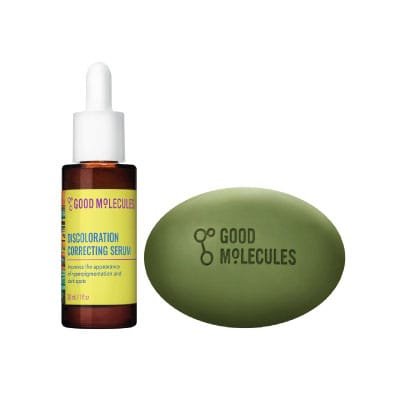
Best Budget — Good Molecules Discoloration Correcting Serum
Good Molecules combines tranexamic acid with kojic acid, niacinamide, and vitamin C derivative in one formula—providing four separate melanin-inhibiting pathways simultaneously at under $15. The most comprehensive dark spot serum available at any drugstore price.
🛒 Good Molecules Discoloration Correcting Serum—Best budget tranexamic acid serum with 4-pathway dark spot treatment.
Best Premium—SkinCeuticals Discoloration Defense
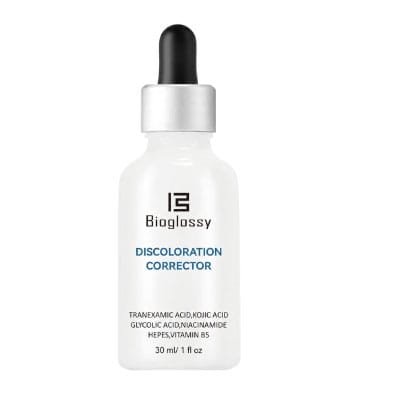
SkinCeuticals Discoloration Defense combines tranexamic acid with kojic acid, niacinamide, and HEPES in a formula backed by SkinCeuticals’ rigorous clinical evidence standards. Clinical testing shows significant improvement in melasma and dark spots at 12 weeks of consistent use.
🛒 SkinCeuticals Discoloration Defense — Best premium tranexamic acid serum for melasma.
Best Korean—Some By Mi Yuja Niacin Brightening Toner
Some By Mi combines tranexamic acid with niacinamide, vitamin C derivatives, and yuzu (yuja) extract in a toner-serum hybrid format—the most convenient K-beauty tranexamic acid delivery for a layered Korean routine.
🛒 c— Best Korean tranexamic acid serum for glass skin brightening.
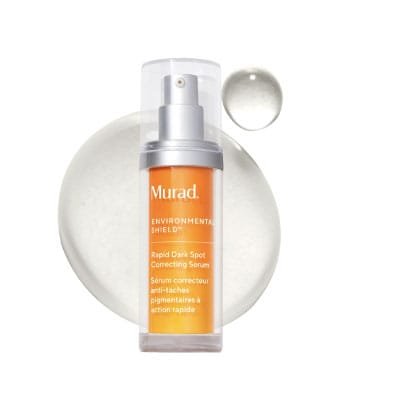
Best for Melasma—Murad Rapid Dark Spot Correcting Serum
Murad specifically targets melasma with tranexamic acid alongside glycolic acid for accelerated cell turnover and resorcinol for additional tyrosinase inhibition—a clinical-grade combination for the most treatment-resistant dark spots.
🛒 Murad Rapid Dark Spot Correcting Serum—The best tranexamic acid serum for melasma and severe dark spots.
Best for Sensitive Skin—The Inkey List Tranexamic-Acid Serum
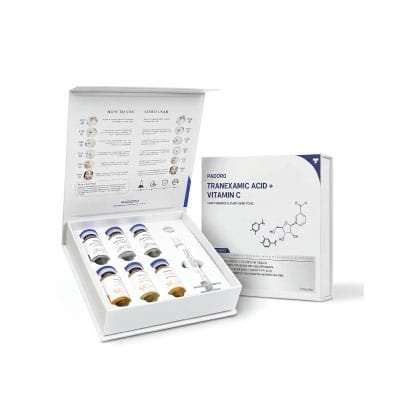
The Inkey List delivers 2% tranexamic acid alongside niacinamide and vitamin C in a gentle, fragrance-free formula appropriate for rosacea-prone and reactive skin that cannot tolerate more complex brightening serums.
🛒 The Inkey List Tranexamic Acid Serum — Best tranexamic acid serum for sensitive skin
Morning Routine With Tranexamic-Acid
| Step | Product | Purpose |
|---|---|---|
| 1 | Gentle cleanser | Clean base |
| 2 | Tranexamic acid serum | Dark spot treatment |
| 3 | Vitamin C serum | Antioxidant + additional brightening |
| 4 | Niacinamide serum | Melanin transfer inhibition |
| 5 | Oil-free moisturizer | Seal |
| 6 | SPF 50—always last | Essential alongside any brightening |
Night Routine With Tranexamic-Acid
| Step | Product | Purpose |
|---|---|---|
| 1 | Double cleanse | Remove SPF. |
| 2 | Tranexamic acid serum | Overnight dark spot treatment |
| 3 | Niacinamide serum | Melanin transfer inhibition |
| 4 | Azelaic acid (alternating) | Additional tyrosinase inhibition |
| 5 | Ceramide moisturizer | Seal and repair |
Frequency
Tranexamic-acid can be used twice daily—morning and night. It does not cause photosensitivity (unlike AHAs), does not require a pH-specific environment (unlike vitamin C), and does not have an adjustment period (unlike retinol). Daily consistent use produces the most progressive improvement.
The SPF Rule—Non-Negotiable
This applies to every brightening ingredient but deserves particular emphasis for tranexamic acid: without daily SPF 50, tranexamic acid cannot win the battle against dark spots.
Tranexamic acid interrupts the UV-triggered melanin production pathway. UV exposure—even on cloudy days, even through windows—continuously reactivates this pathway. If you apply tranexamic acid every day but skip SPF, you are fighting UV darkening every day with your serum rather than preventing it.
SPF 50 every morning, as the absolute final step is not optional when treating hyperpigmentation with any ingredient.
Who Should Use It?
Ideal Candidates
People with melasma—particularly those who have not responded adequately to vitamin C or niacinamide alone, or who need a hydroquinone alternative
People with post-acne dark spots (PIH)—particularly darker skin tones where PIH is more severe and persistent
People with sun damage and age spots—who want UV-pathway-specific treatment alongside tyrosinase inhibitors
Pregnant or breastfeeding individuals—tranexamic acid is generally considered safer than hydroquinone during pregnancy (always confirm with OB-GYN).
Sensitive skin—who cannot tolerate the irritation of vitamin C at effective concentrations or kojic acid
People who have tried other brightening ingredients without results—TXA’s unique mechanism often works where other ingredients have failed.
Who Should Use With Caution
People with extremely reactive skin should patch test first—though tranexamic acid is generally very well tolerated.
Building the Best Dark Spot Routine With It
The most effective dark spot routine combines tranexamic acid with complementary ingredients that address multiple melanin pathways simultaneously:
| Ingredient | Mechanism | When to use |
|---|---|---|
| Tranexamic acid | Plasmin inhibition | Morning and night |
| Vitamin C | Tyrosinase inhibition + antioxidant | Morning |
| Niacinamide | Melanin transfer inhibition | Morning and night |
| AHA (glycolic acid) | Cell turnover acceleration | 1 to 2 nights per week |
| SPF 50 | UV prevention—essential | Every morning—final step |
This five-mechanism approach addresses dark spots more comprehensively than any single ingredient—and is the closest OTC equivalent to prescription-level hyperpigmentation treatment.
What does it do for skin?
Tranexamic acid inhibits plasmin—an enzyme that UV radiation and inflammation activate to stimulate melanocytes (pigment cells) to produce excess melanin. By blocking this plasmin pathway, tranexamic acid interrupts the UV and inflammation-driven melanin production cascade—fading existing dark spots and preventing new hyperpigmentation from forming. It also inhibits endothelin-1, a secondary melanin-stimulating signal. The combination makes it particularly effective for melasma and post-inflammatory hyperpigmentation through mechanisms that vitamin C, kojic acid, and niacinamide do not address.
How long does take to work?
Initial skin tone brightening is noticeable at 4 to 6 weeks of consistent twice-daily use. Significant dark spot fading is visible at 8 to 12 weeks. Full melasma improvement from topical tranexamic acid develops at 12 to 16 weeks. Consistent daily use paired with SPF 50 every morning produces the fastest and most durable results.
Is it safe for everyday use?
Yes—tranexamic acid is one of the best-tolerated brightening actives available. It causes virtually no irritation, no photosensitivity, and no adjustment period. Twice-daily everyday use is both safe and the most effective approach for persistent hyperpigmentation.
Can I use tranexamic-acid with vitamin C?
Yes—and this combination is highly recommended. They work through completely different mechanisms (tranexamic acid via plasmin inhibition, vitamin C via tyrosinase inhibition) targeting the same end result through separate pathways. Apply tranexamic acid first, then vitamin C in the morning. Together they provide more comprehensive dark spot treatment than either alone.
Is tranexamic acid safe during pregnancy?
Topical tranexamic acid is generally considered safer than hydroquinone during pregnancy—it is not significantly absorbed systemically from topical application. However, always confirm with your OB-GYN before using any active skincare during pregnancy. Safe brightening alternatives for pregnancy that pair well with tranexamic acid: niacinamide, azelaic acid, and hyaluronic acid.
Can I use tranexamic acid with retinol?
Yes—on the same night or alternating nights depending on your skin’s tolerance. Tranexamic acid and retinol do not conflict—retinol’s cell turnover acceleration actually enhances the effectiveness of tranexamic acid by bringing less-pigmented cells to the surface faster alongside reducing the melanin production that TXA targets. Use tranexamic acid first, wait 10 minutes, apply retinol, then moisturizer.
Final Thoughts — Why Tranexamic Acid Belongs in Every Dark Spot Routine
It occupies a unique position in brightening skincare—addressing the UV- and inflammation-driven melanin production pathway that no other OTC ingredient specifically targets. For dark spots, post-acne marks, and melasma that have not fully responded to vitamin C, niacinamide, or kojic acid—this is often the missing mechanism.
The clinical evidence is compelling: comparable to hydroquinone for melasma in 12-week trials, with superior tolerability, superior long-term safety, and no rebound concerns. The OTC availability at 2% to 5% concentrations makes it accessible without a prescription. And the minimal irritation profile means virtually every skin type—including sensitive, rosacea-prone, and pregnant—can use it consistently.