
Combination Skin Routine Combination skin is simultaneously the most common skin type in the world and the most confusing to care for. You have an oily T-zone—forehead, nose, and chin—that shines by midday, clogs easily, and breaks out regularly. And you have cheeks that range from normal to genuinely dry, sometimes flaking, often feeling tight after cleansing.
Every moisturizer feels like a compromise. Rich creams for your dry cheeks make your T-zone oilier. Lightweight gels for your oily zones leave your cheeks feeling parched. Most skincare routines designed for a single skin type leave half your face feeling wrong.
This guide solves that completely. The combination skin routine that actually works addresses both zones simultaneously—controlling oil and clearing congestion in the T-zone while maintaining adequate hydration in the drier areas—using products and application techniques specifically chosen for the unique demands of combination skin. Combination Skin Routine
Understanding Combination Skin—Why It Is More Complex Than Other Types
Combination skin exists because the sebaceous glands (oil-producing) are not evenly distributed across your face. The T-zone contains a significantly higher density of sebaceous glands than the cheek and jaw areas—which is why it produces more oil regardless of what you put on it.
This uneven distribution creates genuinely different needs across different facial zones:
T-zone needs: Combination Skin Routine
Oil regulation through niacinamide and BHA
Pore clearing through consistent chemical exfoliation
Lightweight, non-comedogenic products that do not add to existing sebum
Mattifying ingredients that manage midday shine
Cheek and jaw zone needs: Combination Skin Routine
Adequate hydration through hyaluronic acid and ceramides
Barrier support through emollient ingredients
Protection from the over-drying effect of oil-control products used on the T-zone
The core combination skin challenge: Most products cannot serve both zones optimally—which is why combination skin often needs a zone-specific application approach rather than a uniform routine.
Step 1—Identifying Your Combination Skin Type
Not all combination skin is identical. Understanding your specific version helps calibrate the right routine intensity.
Oily-Combination Skin
The T-zone is visibly shiny within 1 to 2 hours of cleansing. Blackheads and breakouts concentrated on the nose and forehead. Cheeks are normal to only mildly dry. This is the most common combination skin type.
Routine focus: Oil control is the priority. Lightweight hydration for cheeks. BHA for T-zone congestion.
Dry-Combination Skin: Combination Skin Routine
The T-zone produces moderate oil, but the cheeks are noticeably dry—sometimes visibly flaky, sometimes feeling tight even after moisturizer. Less common but particularly challenging to balance.
Routine focus: Adequate cheek hydration is the priority. Gentle oil control without over-drying. Richer moisturizer applied only to dry zones. Combination Skin Routine
Combination Skin With Acne
T-zone breakouts are regular. Cheeks may have occasional hormonal breakouts. This version requires acne-targeted actives (BHA, niacinamide, and adapalene) focused on the T-zone without over-treating the drier cheek areas. Combination Skin Routine
Routine focus: Targeted BHA and retinoid treatment on acne zones. Barrier-supportive hydration in drier areas.
The Complete Combination Skin Morning Routine
Step 1 Morning—Cleanser
Morning cleansing for combination skin removes overnight sebum and bacteria without stripping the drier cheek areas.
The key: A gel or low-foam cleanser—powerful enough to remove T-zone oil but gentle enough not to strip the cheeks.
Technique for combination skin: Spend slightly more time massaging the T-zone than the cheeks. The extra 15 to 20 seconds of massage on the forehead and nose provides additional cleansing action where it is needed without over-cleansing the cheeks.
🛒 CeraVe Foaming Facial Cleanser—Best combination skin cleanser. Mild surfactants remove T-zone oil. Ceramides protect cheeks from over-drying. Non-comedogenic.
🛒 COSRX Low pH Good Morning Gel Cleanser—Best Korean cleanser for combination skin. pH 5.0 protects acid mantle across all zones.
🛒 La Roche-Posay Effaclar Purifying Foaming Gel—Best for combination skin with acne-prone T-zone.
Step 2 Morning—Toner :Combination Skin Routine
A balancing toner after cleansing resets pH across all facial zones simultaneously—preparing the skin surface for optimal serum and moisturizer absorption. Combination Skin Routine
For combination skin: Choose an alcohol-free toner that provides mild hydration while allowing subsequent actives to penetrate effectively. Combination Skin Routine
Zone-specific toner technique: If using a BHA or exfoliating toner, apply with a cotton pad, focusing on the T-zone. Apply hydrating toner to the entire face.
🛒 COSRX AHA/BHA Clarifying Treatment Toner — Natural BHA for T-zone pore clearing. Hydrating for overall balance.
🛒 Klairs Supple Preparation Unscented Toner—The best alcohol-free hydrating toner for combination skin.
Step 3 Morning—Vitamin C Serum
Vitamin C is the most important morning serum for combination skin—providing antioxidant protection against UV-generated free radicals that worsen both oil oxidation (darkening pores) and hyperpigmentation (worsening post-acne marks on the T-zone).
Apply uniformly across the entire face—both oily and dry zones benefit equally from vitamin C’s antioxidant and brightening activity.
🛒 The Ordinary Ascorbic Acid 8% + Alpha Arbutin 2%—the best affordable vitamin C for combination skin. Brightening with reduced irritation.
🛒 La Roche-Posay Pure Vitamin C 10% Serum—Best vitamin C for combination sensitive skin.
Step 4 Morning—Niacinamide Serum
Niacinamide 10% is the most important active ingredient in any combination skin routine. Applied to the entire face—it regulates oil in the T-zone while simultaneously strengthening the barrier in the drier cheek areas.
What niacinamide does for combination skin specifically:
Reduces T-zone sebum production by up to 55% at 10% concentration
Minimizes pore appearance on nose and forehead within 6 to 8 weeks
Fades post-acne dark spots on the T-zone
Strengthens ceramide synthesis in cheeks—improving moisture retention
Calms redness from both active breakouts and irritation
🛒 The Ordinary Niacinamide 10% + Zinc 1%—World’s bestselling niacinamide serum. Best value for combination skin.
🛒 COSRX The Niacinamide 15 Serum—15% concentration for more aggressive oil control on very oily T-zones.
Step 5 Morning—Moisturizer (Zone-Specific Application)
The moisturizer step is where combination skin routines most often go wrong. A single moisturizer applied uniformly across the face cannot simultaneously satisfy an oily T-zone and a dry cheek area.
The two-moisturizer technique (most effective):
Apply an oil-free gel moisturizer to the entire face first. Then apply a richer ceramide cream only to the dry cheek and jaw areas on top of the gel base. Combination Skin Routine
This layering approach delivers oil-free hydration everywhere and additional emollient support only where it is needed.
The single moisturizer compromise (more convenient):
Choose a lightweight gel cream that sits between the two extremes—light enough for the T-zone, substantive enough for the cheeks. Apply more product to cheeks and less to the T-zone.
🛒 Neutrogena Hydro Boost Water Gel—Best oil-free gel for combination skin overall application.
🛒 CeraVe Moisturizing Cream—Best for dry cheek zones—apply on top of gel as a second layer on dry areas only.
🛒 Belif The True Cream Aqua Bomb—Best single gel-cream for combination skin. Balances both zones in one product.
Step 6 Morning—SPF 50 (Non-Negotiable Final Step)
SPF is essential for combination skin for two reasons beyond general UV protection: UV exposure darkens post-acne marks that combination skin is prone to, and UV triggers additional sebum oxidation that makes blackheads appear darker and pores look larger.
For combination skin: Choose a lightweight, non-comedogenic SPF that does not add heaviness to the T-zone while providing adequate protection across the drier cheek areas.
🛒 Beauty of Joseon Relief Sun SPF 50+ PA++++—Best Korean SPF for combination skin. Niacinamide and probiotics. Zero white cast.
🛒 EltaMD UV Clear Broad-Spectrum SPF 46—Best SPF for combination acne-prone skin. Zinc oxide plus niacinamide.
🛒 La Roche-Posay Anthelios Invisible Fluid SPF 50+—The best European SPF formula for combination skin.
The Complete Combination Skin Morning Routine — At a Glance
| Step | Product | Zone application |
|---|---|---|
| 1 | Gentle gel cleanser | All face—extra focus on T-zone |
| 2 | Balancing toner | All face—BHA toner on T-zone if using |
| 3 | Vitamin C serum | All face |
| 4 | Niacinamide 10% serum | All face |
| 5 | Oil-free gel moisturizer | All face |
| 5b | Ceramide cream (optional) | Dry cheeks and jaw only |
| 6 | SPF 50—always last | All face—final step |
The Complete Combination Skin Night Routine
Step 1 Night—Oil Cleanser (Double Cleanse First Step)
The double cleanse is essential for combination skin—the T-zone accumulates SPF, sebum, and pollution throughout the day that a single water-based cleanser cannot fully remove regardless of how thoroughly you wash.
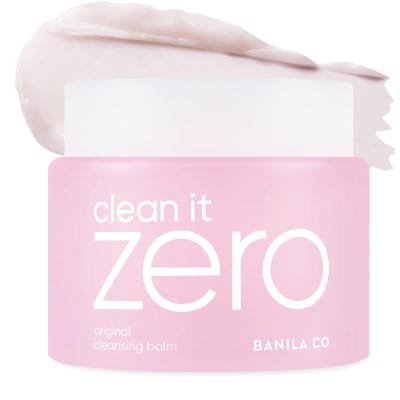
An oil cleanser dissolves oil-based SPF and makeup in the T-zone completely—without stripping the cheeks because oil cleansers emulsify with water and rinse cleanly.
🛒 Banila Co Clean It Zero Cleansing Balm—Best first-cleanse for combination skin. Non-comedogenic. Rinses completely clean.
🛒 COSRX Pure Fit Cica Clear Cleansing Oil—The best Korean oil cleanser for combination and sensitive skin.
Step 2 Night—Water-Based Cleanser (Double Cleanse Second Step)
After the oil cleanser—your regular gel cleanser removes any remaining emulsified residue, leaving skin completely clean and ready for treatment products.
Step 3 Night—Chemical Exfoliant (3 Nights Per Week)
BHA toner on T-zone (3 nights per week): Salicylic acid penetrates inside the pore and dissolves the sebum-dead cell mixture, creating blackheads, enlarged pores, and T-zone acne. Applied to the T-zone only or lightly across the whole face.
AHA toner — whole face (1 night per week): Glycolic or lactic acid surface exfoliation brightens dull skin, accelerates post-acne mark fading, and smooths texture across all zones.
Never on the same night as retinol.
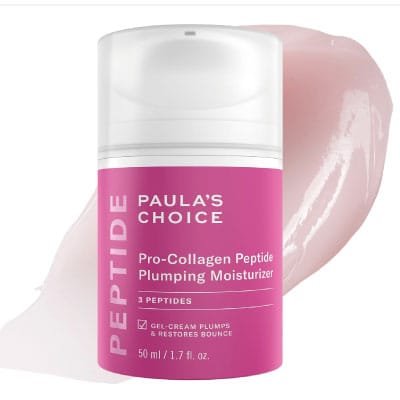
🛒 Paula’s Choice 2% BHA Liquid Exfoliant—Gold standard BHA for T-zone pore clearing.
🛒 The Ordinary Glycolic Acid 7% Toning Solution—Best AHA for combination skin brightening once per week.
Step 4 Night—Hyaluronic Acid Serum
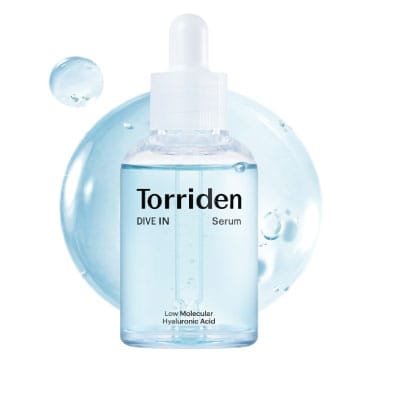
Applied to slightly damp skin after toning—hyaluronic acid delivers water-based hydration to all zones simultaneously. The drier cheek areas benefit most, but the T-zone also needs adequate water-based hydration to prevent the dehydration that worsens compensatory oil production.
🛒 The Ordinary Hyaluronic Acid 2% + B5—Best affordable HA serum for combination skin. Multi-weight formula with ceramides.
🛒 Torriden Dive-In Low Molecular HA Serum—Best Korean HA serum for deep combination skin hydration.
Step 5 Night—Treatment Serum (Alternating Nights)
Retinol nights (2 nights per week — non-exfoliant nights): Combination Skin Routine
Retinol is the most effective long-term treatment for combination skin—normalizing pore lining cell turnover to prevent T-zone comedone formation, stimulating collagen for anti-aging, and accelerating post-acne mark fading.
Start at 0.1% every 5th night. Build to 2 nights per week over 8 to 12 weeks.
🛒 The Ordinary Granactive Retinoid 2% Emulsion—Best beginner retinoid for combination skin. Less irritating than standard retinol.
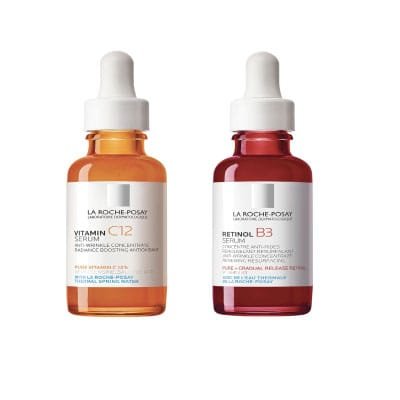
🛒 La Roche-Posay Retinol B3 Serum—Best retinol for combination sensitive skin. Niacinamide buffer reduces irritation.
Step 6 Night—Niacinamide Serum
Niacinamide at night continues the oil regulation and barrier strengthening that the morning application begins—providing 24-hour continuous sebum-regulation signaling to sebaceous glands.
Step 7 Night—Zone-Specific Night Moisturizer
T-zone: CeraVe PM Facial Moisturizing Lotion—lightweight niacinamide plus ceramide formula that does not add heaviness to already-oily areas
Cheeks: CeraVe Moisturizing Cream—richer ceramide formula applied generously to dry zones for overnight barrier repair
🛒 CeraVe PM Facial Moisturizing LoLotion—Best overall night moisturizer for combination skin.
The Complete Combination Skin Night Routine — At a Glance
| Step | Product | Frequency |
|---|---|---|
| 1 | Oil cleanser | Every night |
| 2 | Gel cleanser | Every night |
| 3 | BHA toner (T-zone) | 3 nights per week |
| 4 | HA serum—all face | Every night |
| 5 | Retinol serum | 2 nights per week |
| 6 | Niacinamide serum | Every night |
| 7 | PM gel moisturizer—T-zone | Every night |
| 7b | Ceramide cream—cheeks | Every night |
CeraVe Combination Skin Routine
CeraVe’s ceramide-first philosophy works particularly well for combination skin because ceramides support the barrier across dry zones while the brand’s niacinamide-containing products address oil in the T-zone. Combination Skin Routine
CeraVe combination skin routine:
Morning: CeraVe Foaming Cleanser → CeraVe Hydrating Toner → CeraVe Vitamin C Serum → CeraVe Niacinamide Serum → CeraVe PM Lotion (T-zone) + CeraVe Moisturizing Cream (cheeks) → Non-comedogenic SPF 50
Night: CeraVe Hydrating Cleanser (double cleanse) → CeraVe Resurfacing Retinol Serum (3 nights) → CeraVe PM Lotion
Korean Combination Skin Routine
Korean skincare’s philosophy of layered lightweight hydration is particularly well-suited to combination skin—the multiple thin layers provide adequate moisture for dry zones without overwhelming oily zones.
Korean combination skin routine:
Morning: COSRX Low pH Cleanser → COSRX AHA/BHA Toner → COSRX Propolis Light Ampule → COSRX Niacinamide 15 Serum → COSRX Advanced Snail 92 Cream → Beauty of Joseon Relief Sun SPF 50+
Night: Banila Co Oil Cleanser → COSRX Low pH Cleanser → Torriden Dive-In HA Serum → COSRX Snail 96 Mucin Essence → CeraVe PM Lotion (T-zone) → Beauty of Joseon Dynasty Cream (cheeks)
Combination Skin Routine for Men
Men’s combination skin follows identical biological principles but benefits from simplified, time-efficient routines.
Men’s combination skin morning routine (5 minutes): Combination Skin Routine
- CeraVe Foaming Cleanser
- The Ordinary Niacinamide 10% + Zinc 1%
- Neutrogena Hydro Boost Water Gel
- EltaMD UV Clear SPF 46 — final step
Men’s combination skin night routine (5 minutes):
- CeraVe Foaming Cleanser
- Paula’s Choice 2% BHA (3 nights) or The Ordinary Granactive Retinoid (2 nights)
- CeraVe PM Lotion
This 4-step morning and 3-step night routine addresses all combination skin concerns in under 10 minutes combined.
Combination Skin Routine With Acne
When combination skin includes regular T-zone breakouts, the routine needs dedicated acne treatment alongside balanced hydration.
Additional steps for combination skin with acne: Combination Skin Routine
Add adapalene (Differin) at night: The most effective OTC retinoid for acne is applied to the T-zone 3 nights per week after BHA nights alternate.
Add benzoyl peroxide spot treatment: Applied directly to individual active breakouts in the morning—not spread across the whole face.
Add COSRX Snail Mucin: Accelerates healing of post-acne marks while providing hydration that does not aggravate the T-zone.
Combination Skin Routine for Hyperpigmentation
Post-acne marks on the T-zone are the most common hyperpigmentation concern for combination skin. A targeted four-mechanism approach fades these faster than any single product:
- Vitamin C serum (morning)—blocks melanin production at tyrosinase
- Niacinamide serum (morning and night)—blocks melanin transfer
- BHA toner (3 nights per week)—accelerates cell turnover, revealing fresher skin
- SPF 50 every morning—prevents UV from re-darkening fading marks
Without SPF every morning—the other three steps are significantly less effective because UV re-darkens marks daily.
The 4 Biggest Combination Skin Mistakes
Mistake 1—Using only one moisturizer applied uniformly Different zones need different hydration levels. Using a rich cream everywhere makes the T-zone oilier. Using a lightweight gel everywhere leaves cheeks dry. Zone-specific application makes every moisturizer work better.
Mistake 2—Over-exfoliating the T-zone Daily BHA or AHA on the T-zone strips the barrier and causes rebound oil production—paradoxically making the T-zone oilier. Maximum 3 to 4 nights per week of chemical exfoliation.
Mistake 3—Skipping moisturizer on the T-zone The dehydration-sebum cycle: dehydrated T-zone skin produces more oil to compensate. An oil-free gel moisturizer applied to the T-zone reduces—not increases—oiliness over time.
Mistake 4 — Using the same cleanser intensity for both zones A foaming cleanser appropriate for the T-zone may be too strong for the cheeks. Either choose a middle-ground gentle foam or use slightly less pressure and time on the cheek areas.
What is the best skincare routine for combination skin?
The best combination skin routine uses targeted zone-specific application: an oil-free gel moisturizer plus SPF 50 every morning uniformly, with additional ceramide cream applied only to dry cheeks. Niacinamide 10% serum morning and night addresses oil in the T-zone while strengthening the barrier in the cheeks. BHA toner 3 nights per week targets T-zone pore congestion. This approach serves both skin zones rather than compromising between them.
What moisturizer is best for combination skin?
The most effective approach uses two moisturizers: an oil-free gel (Neutrogena Hydro Boost or similar) applied across the entire face, with a richer ceramide cream (CeraVe Moisturizing Cream) applied only to dry cheek and jaw areas. This zone-specific approach serves both facial zones without compromise. For a single-product solution—a lightweight gel cream—Belif Aqua Bomb provides the best middle-ground balance.
Final Thoughts — The Combination Skin Routine That Works
Combination skin requires a more thoughtful approach than any other skin type—because a one-size-fits-all routine will always leave half your face unsatisfied. The T-zone needs oil control and pore clearing. The cheeks need hydration and barrier support. The best combination skin routines acknowledge this distinction and work with it rather than pretending it does not exist.
The foundation of any effective combination skin routine: niacinamide 10% applied uniformly across all zones morning and night—the one ingredient that genuinely serves both requirements simultaneously. Zone-specific moisturizer application that matches the texture to each zone’s needs. BHA toner focused on the T-zone 3 nights per week. And SPF 50 every morning as the non-negotiable final step.
Build this foundation consistently for 8 to 12 weeks. Then evaluate what your skin still needs—whether additional hydration for very dry cheeks, more aggressive BHA for significant T-zone congestion, or retinol for anti-aging benefit across both zones